Easy to Chew (IDDSI Level EC7)

Regular foods that are naturally soft and easy to chew, without tough, dry, or hard components.
Malted milk has a long, practical history in baking and home kitchens. It was developed in the late 19th century as a nourishing, shelf-stable food made from malted barley, wheat flour, and milk. What started as a health product quickly found its way into desserts, especially once soda fountains and bakeries realized how well malt paired with chocolate, vanilla, and butter.
From a baking standpoint, malted milk powder does more than add flavor. It brings both enzymatic sugars and milk solids, which influence how a cookie bar bakes and browns. The malt contributes natural sweetness that isn’t sharp, while the milk proteins encourage gentle browning, through the Maillard reaction. That’s why malted baked goods tend to look evenly golden and smell rich without needing high heat or extra sugar.
Why Use Malted Milk in Altered Texture Cooking
In cookie bars specifically, malted milk helps create a soft, cohesive crumb. The milk solids bind moisture, which keeps the bars tender even after cooling. Instead of a crisp edge and a dry center, you get a uniform texture that cuts cleanly and stays pleasantly soft over time. That makes malt especially useful when you want a dessert that holds together well, reheats gently, or needs to remain easy to chew without crumbling.
There’s also a reason malt pairs so naturally with butter. Butter carries fat-soluble flavor compounds, and malt’s toasted notes bloom when they’re warmed together. In bar cookies, where butter is melted or creamed thoroughly, that combination spreads evenly through the batter. The result is a dessert that tastes rounded and nostalgic rather than sugary or flat.
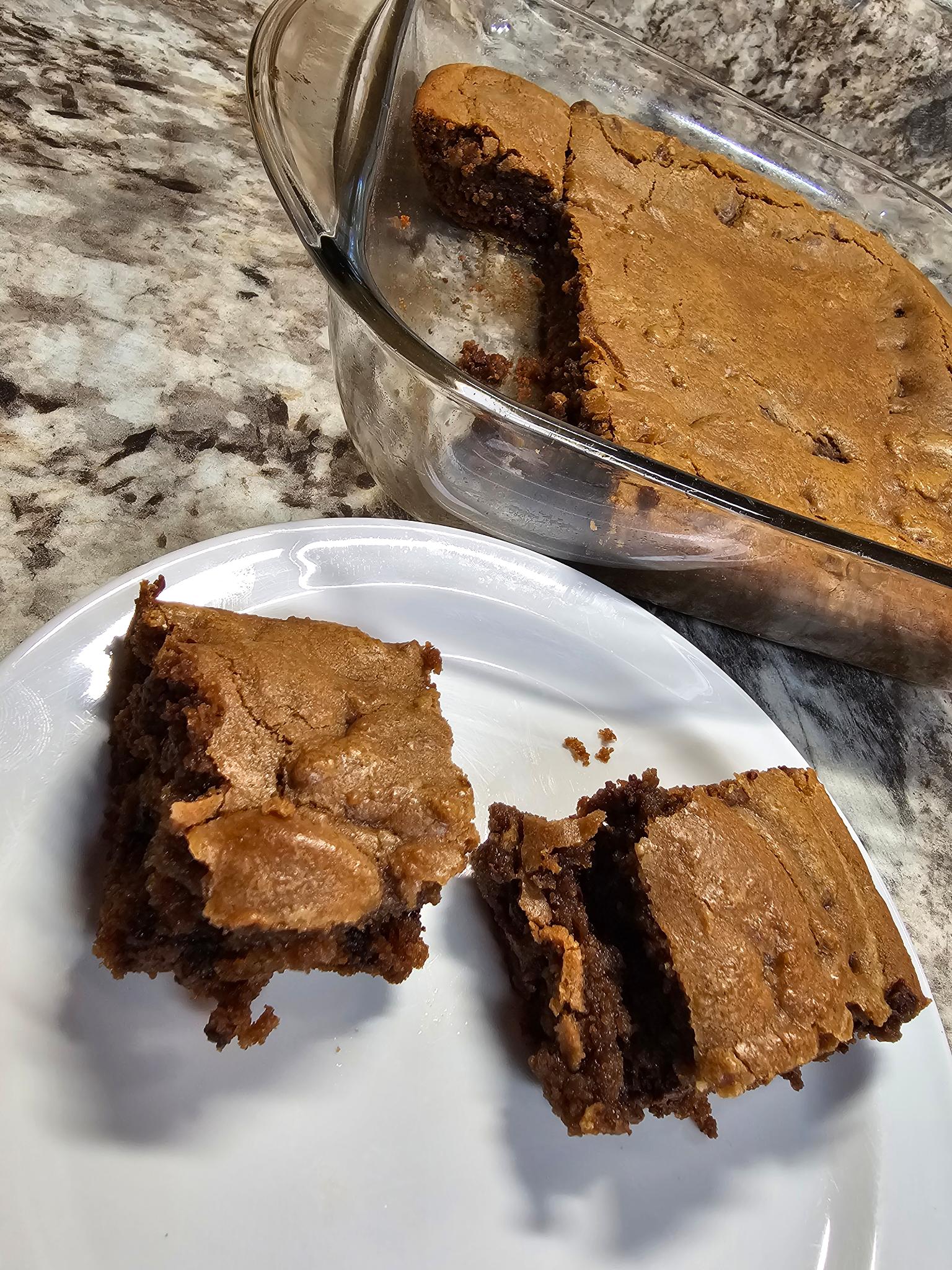
These Malted Milk Cookie Bars are inspired by the nostalgic flavors of classic milkshakes and malted milk balls. Combining the richness of malted milk powder with chewy, buttery cookie dough, these bars evoke memories of vintage soda fountains and sweet childhood treats. The smooth flavor of the malt pairs beautifully with melty chocolate and a slightly nutty finish, creating a comforting, familiar taste in every bite. Ideal for family gatherings or casual indulgence, these cookie bars bring together the old-school joy of a malted milkshake in a soft, easy-to-eat dessert that’s easy to make at home.
Make this Recipe for Your IDDSI Level
As written, this recipes is at IDDSI Level 7 Easy to Chew. This recipe can also be adapted for Level 3 Liquidized, Level 4 Pureed, Level 5 Minced and Moist, and Level 6 Soft and Bite Sized. See the adaptation instructions below or if you are printing the recipe, they will be included in the notes section.
Level 3 Liquidized (Smooth enough to drink or pour; no chewing): Blend the finished recipe with milk until the liquid is flowing around 1-2mL every 10 seconds (check out the IDDSI flow test details).
Level 4 Pureed (Smooth and thick enough to hold shape on a spoon; no chewing): Blend baked cookie with milk, pudding, or whipped topping until smooth and scoopable.
Level 5 Minced and Moist (Soft pieces that fit between fork prongs in a puree; minimal chewing): Bake soft, cut into 4mm size pieces, serve layered with pudding/yogurt to pregel.
Level 6 Soft and Bite Sized (Tender pieces smaller than the width of fork prongs): Bake soft and serve warm in 15mm size pieces, layering with pudding/yogurt for pregelling for maximum softness.
Malted Milk Cookie Bars Recipe
Ingredients
Equipment
Method
- Preheat oven to 350°F (175°C). Line an 8×8-inch baking pan with parchment paper or lightly grease it.
- In a bowl, whisk together flour, malted milk powder, baking soda, and salt. In a separate large bowl, cream together the softened butter, brown sugar, and granulated sugar until light and fluffy (2–3 minutes). Add the egg and vanilla extract and mix until combined.
- Gradually add the dry ingredients to the wet mixture, mixing until a soft dough forms. Stir in chocolate chips (if using).
- Press the dough evenly into the prepared pan. Bake for 20–25 minutes or until the top is golden and the center is just set (Temperature at 160 ℉). Cool completely in the pan before slicing or modifying for texture level. Baking on the lower end of the range may help in soft edges, but be sure to test edge before serving as IDDSI level 7 Easy to Chew.
SLP Notes
IDDSI Texture Modifications:- Level 3 Liquidized (LQ3): Blend the finished recipe with milk until the liquid is flowing around 1-2mL every 10 seconds (check out the IDDSI flow test details).
- Puree 4 (PU4): Blend baked cookie with milk, pudding, or whipped topping until smooth and scoopable.
- Minced & Moist 5 (MM5): Bake soft, cut into 4mm size pieces, serve layered with pudding/yogurt to pregel.
- Soft & Bite-sized 6 (SB6): Bake soft and serve warm in 15mm size pieces, layering with pudding/yogurt for pregelling for maximum softness.
- Protein: Swap ¼ cup flour for oat flour, protein powder to flour mix or serve with a glass of high protein milk.
- Fats: Use applesauce to replace half of the butter to decrease, add 1-2 tbsp nut butter to dough to increase.
- Carbs: Use lower sugar chocolate to reduce, or replace with erythritol or monk fruit sweetener or replace 1/4 cup of flour with almond flour or coconut flour (absorbs a lot of liquids so may be more dense).
- Gluten-free: Make the swap for your favorite flour blend.
- Dairy-free/Vegan: Replace eggs and butter with 3/4 cup of applesauce, or create a flax or chia “egg” (1 part ground flax or chia, 3 parts water, rest for 5 minutes) or use vegan egg replacement like Just Egg. Use coconut milk powder or find a vegan malted drink mix.
- Cream butter and sugars together, then mix everything in the same bowl; no need for separate wet/dry steps.
- Dough can be made in advance and chilled or frozen in pre-portioned scoops for later baking.
Malted milk cookie bars sit in a sweet spot between cookie and cake. They don’t rely on crunch for appeal, and they don’t need frosting or heavy add-ins to feel complete. The flavor does the work. Served warm, they’re soft and almost custardy in the center. Served cool, they firm just enough to slice neatly without becoming tough. That balance is exactly why malt has stuck around for more than a century: it supports structure while making baked goods feel indulgent and familiar at the same time.
Keep Reading
Looking for guidance on how to find safe fast food after stroke or surgery? Check out my guide for how to modify and what to order when eating out with texture modifications. One of my favorite easy to chew snacks is my Saffron Rice Arrancini; you can find all of my texture modified appetizer recipes here.
Every recipe here is designed for texture sensitive eaters: from dysphagia to dental issues to picky eaters. Get recipe roundups and practical tips by joining the mailing list.