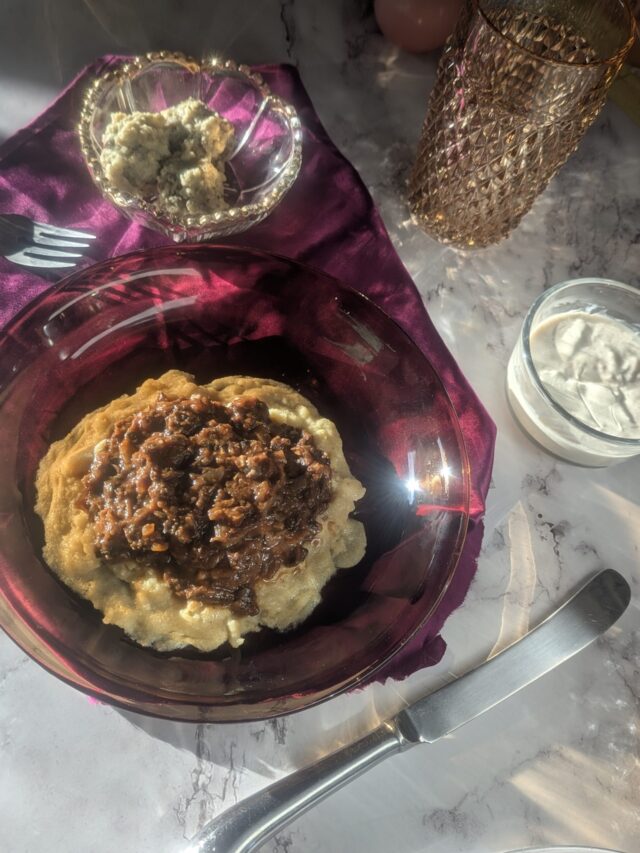
Minced & Moist (IDDSI Level 5)

Soft foods that are finely chopped and held together with moisture so they don’t crumble or fall apart.
Why a low-acid eggplant parmesan exists at all
For a lot of people, reflux isn’t about spice or portion size. It’s about acid load and how long food sits in the stomach. Traditional eggplant parmesan stacks multiple triggers at once: high amounts of dairy, tomato sauce, and a heavy oil soak for frying that slows digestion.
Eggplant is naturally mild and slightly alkaline. When it’s peeled and cooked gently, it becomes one of the more forgiving vegetables for people managing GERD. Replacing tomatoes with roasted sweet peppers lowers acidity without turning the dish into something unfamiliar or bland. The goal isn’t to strip food down. It’s to rebuild it in a way that respects how bodies actually respond to it.
Baking eggplant changes more than the fat content
When fried, eggplant acts like a sponge, pulling fat into its structure. That combination of fat and softened fiber slows gastric emptying and increases reflux risk for many people. Baking works differently. It collapses the eggplant’s internal structure, releases moisture, and concentrates flavor without saturating it in oil.
From a feeding standpoint, baked eggplant is also more predictable. The texture is softer, more uniform, and easier to control once minced. That consistency matters whether you’re managing reflux, dysphagia, or both.
Designed for minced and moist, shared by everyone
This recipe was built for Minced and Moist (IDDSI level 5). That means peeled vegetables, controlled particle size, and enough cohesion that the food holds together without being sticky or dense. Those choices make it safer and more comfortable for people who avoid certain textures because of swallowing difficulty.
At the same time, food like this rarely stays in one lane at the table. For others eating alongside someone on a modified texture diet, this dish often evolves. A warm dip. A spread for soft veggie bites. A spooned topping for tender chicken or fish. Nothing about the recipe changes. Only how it’s served.
That flexibility is intentional. Eating together matters. Food shouldn’t announce who needs accommodations.
A clinician’s lens, a cook’s hands
I approach recipes like this from both sides of the table. I’ve spent years working with people who are anxious about eating because food has hurt them before. I’ve also cooked long enough to know that comfort comes from flavor, familiarity, and trust in what’s on the plate.
This dish isn’t about fear or avoidance; it’s about confidence. When people understand why certain foods feel better and how small changes can help, they’re more willing to eat. More willing to try. More willing to enjoy meals again.
That’s the real goal here. Food that feels safe without feeling clinical. Familiar without being rigid. And built with enough care that it works for reflux, dysphagia, and the many people quietly navigating both.
Make this Recipe for Your IDDSI Level
As written, this recipes is at IDDSI Level 5 Minced and Moist. This recipe can also be adapted for Level 3 Liquidized, Level 4 Pureed, Level 6 Soft and Bite Sized, and Level 7 Easy to Chew. See the adaptation instructions below or if you are printing the recipe, they will be included in the notes section.
Level 3 Liquidized (Smooth enough to drink or pour; no chewing): Blend the finished mixture until fully smooth and reheat gently. Add warm milk, stock, or water slowly to keep it flowing; you must use IDDSI flow testing to ensure correct thinness.
Level 4 Pureed (Smooth and thick enough to hold shape on a spoon; no chewing): Blend the finished mixture until fully smooth and reheat gently. Add warm milk, stock, or water slowly to keep it cohesive, but not sticky. (I’ve got a page all about how to test for the right thickness and more for all IDDSI levels.)
Level 6 Soft and Bite Sized (Tender pieces smaller than the width of fork prongs): Dice the eggplant into 15mm pieces instead of mincing, keeping sauce as instructed.
Level 7 Easy to Chew (Foods that are soft and easily bite into pieces): Peel the skin from the eggplant and then slice into 1 inch pieces, keep sauce as instructed.
Low-Acid Eggplant Parmesan Recipe
Ingredients
Equipment
Method
- Preheat oven to 400°F (205°C). Line a baking sheet with parchment paper. Peel eggplant completely, slice in half and check for and remove seeds. Dice and lightly coat with olive oil spray and salt well. Bake eggplant for 20–25 minutes until fully soft and collapsed, without browning. Cool slightly.
- Reduce oven temperature to 375°F (190°C). Mince baked eggplant to ≤4 mm pieces. Prepare the sauce by blending roasted peppers, olive oil, roasted garlic (if using), and ricotta until completely smooth and thick.
- In a large bowl, combine minced eggplant with enough pepper sauce to fully coat. Fold in ricotta and half of the Parmesan. Lightly oil a 9×12-inch baking dish. Spread mixture evenly and smooth the surface. Cover and bake for 25 minutes.
- Uncover, add remaining cheese, and bake an additional 10–15 minutes until set. Rest 10 minutes before serving with remaining parmesan.
SLP Notes
IDDSI Modifications: Level 3 Liquidized: Blend the finished mixture until fully smooth and reheat gently. Add warm milk, stock, or water slowly to keep it flowing; you must use IDDSI flow testing to ensure correct thinness. Level 4 Pureed: Blend the finished mixture until fully smooth and reheat gently. Add warm milk, stock, or water slowly to keep it cohesive, but not sticky. Level 6 Soft and Bite Sized: Dice the eggplant into 15mm pieces instead of mincing, keeping sauce as instructed. Level 7 Easy to Chew: Peel the skin from the eggplant and then slice into 1 inch pieces, keep sauce as instructed. Testing Method: Food should pass the fork pressure test (mashes easily with light pressure) and the spoon tilt test (holds together but slides off easily when tilted). Particle Size: Pieces must be ≤ 4 mm for adults (2 mm for children). All food should appear cohesive, not crumbly or sticky. Moisture Level: Add small amounts of sauce, broth, or dressing until the mix clings together without pooling liquid. Serving Tip: Keep the dish visually appealing by shaping or layering components while maintaining moisture. Retest texture if reheated or refrigerated.How do I…
Adjust the macros?
Protein: Add meats like sausage, chicken or plant based via pureed white beans or silken tofu in the sauce to fortify the dish. Stir in blended cottage cheese or ricotta fortified with unflavored protein powder before baking.
Fat: Use part-skim ricotta and reduce parmesan by half, or add small amount of heavy cream to whole milk ricotta to increase caloric density.
Carbs: This is naturally a lower carb meal, the tomato sauce is one of the few places added sugars can creep in, you could swap in tomato paste for a portion.
Make it fit my eating style?
Gluten-Free: This recipe is naturally gluten free, enjoy!
Dairy-Free/Vegan: Replace dairy with your favorite plant based version and replace with nutritional yeast or smoked paprika to get more savory depth.
Make it fit my spoons?
Use store bought pasta sauces, look for frozen cubed eggplant.
This is the kind of recipe I come back to when eating needs to feel steady again. Not exciting in a loud way, but reassuring. It respects the realities of reflux and texture needs without asking anyone to give up the comfort of a familiar dish. Whether it’s served as a full meal, a shared table dish, or something softer alongside other foods, it’s meant to make eating feel possible and calm. When food is built with care, it stops being something you brace for and becomes something you can trust.
More Information
This recipe uses the same soft, cohesive textures that tend to work better when eating is more effortful.
Are you a caregiver? Head over to the caregiver resource page to get assistance with giving assistance for modified textures.