Pureed (IDDSI Level 4)

Completely smooth foods/extremely thick liquids with no lumps that hold their shape on a spoon and don’t require chewing.
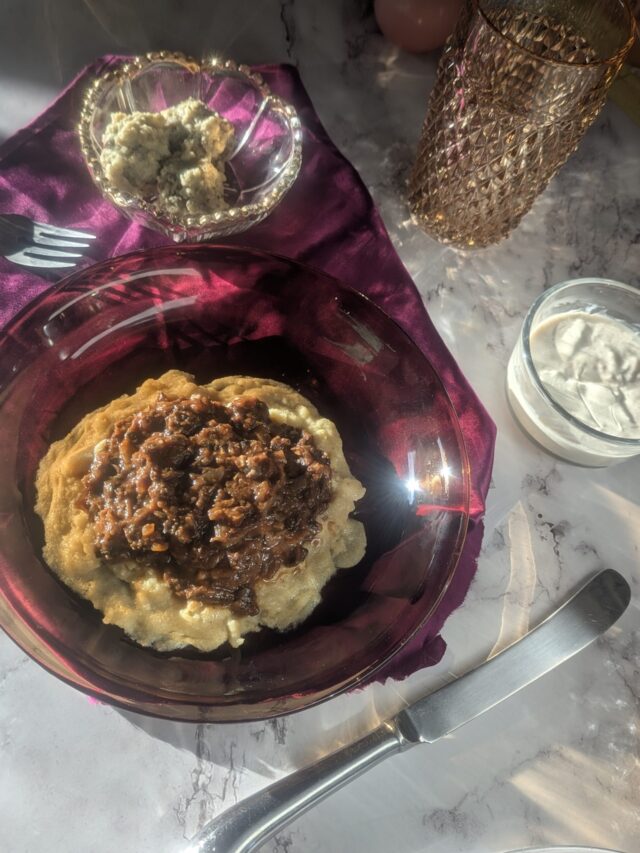
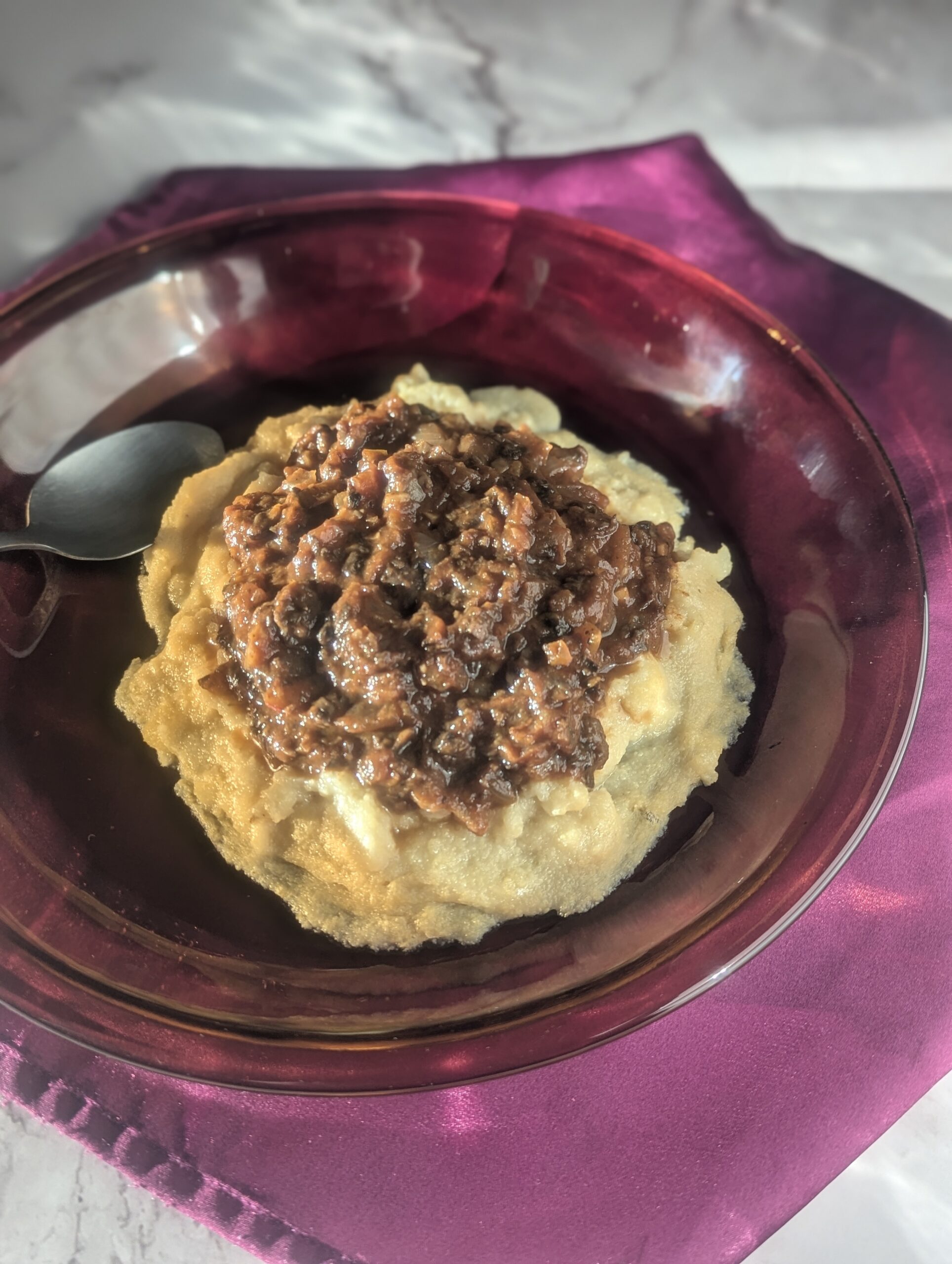
Some foods earn their place in the kitchen not because they’re flashy, but because they’re endlessly useful. Creamy polenta is one of those quiet workhorses. When it’s cooked loose and well hydrated, it becomes a smooth, comforting base that pairs easily with all kinds of flavors and holds up beautifully over time. It’s the kind of dish you can cook once and return to throughout the week in different ways. Fully hydrated corn starches are what make polenta reheat well, especially when there’s enough liquid and fat present. A splash of milk or broth brings it right back, and the parmesan helps stabilize the texture so it doesn’t split or seize after chilling.
This particular recipe was designed as a Pureed (IDDSI Level 4) base recipe to assist with meal prep throughout the week. By restraining the ingredients now, it really shines as an extra building block in the weekly menu rotation, particularly if you’re cooking for two people but want variety. Combine it with the leftovers or use it to compliment another main dish. If you are searching for a plant-based main, adding some vegetables at your texture level can personalize this dish to tastes or what’s in season.
This recipe was developed as part of my Italian multi-course date night + meal prep recipe set for two.
Make this Recipe for Your IDDSI Level
As written, this recipes is at IDDSI Level 4 Pureed . This recipe can also be adapted for Level 3 Liquidized, Level 5 Minced and Moist, Level 6 Soft and Bite Sized, and Level 7 Easy to Chew. See the adaptation instructions below or if you are printing the recipe, they will be included in the notes section.
Level 3 Liquidized (Smooth enough to drink or pour; no chewing): Blend, slowly adding broth until it moved when poured at a pace of 2 mL per 10 seconds (check out the flow test details).
Level 5 Minced and Moist (Soft pieces that fit between fork prongs in a puree; minimal chewing): Enjoy as written; if adding any vegetables, be sure to mince to <4mm and test for softness like the polenta.
Level 6 Soft and Bite Sized (Tender pieces smaller than the width of fork prongs): Enjoy as written, dice any added vegetables to <15mm and cook until soft
Level 7 Easy to Chew (Foods that are soft and easily bite into pieces): Enjoy as written
Creamy Parmesan Polenta Recipe
Ingredients
Equipment
Method
- Bring the broth to a gentle boil in a medium saucepan. Reduce heat to medium-low and slowly whisk in the cornmeal, stirring constantly to prevent lumps. Cook, stirring frequently, for 25–30 minutes until fully thickened and the grains are completely soft.
- Remove from heat and stir in butter, Parmesan cheese, and cream until fully melted and smooth. Add additional warm liquid as needed to achieve a smooth, spoonable purée texture.
- Blend briefly with an immersion blender if necessary to ensure uniform texture. Adjust salt to taste and serve warm.
SLP Guidance
IDDSI Texture Modifications:- Level 3 Liquidized (LQ3): Blend, slowly adding broth until it moved when poured at a pace of 2 mL per 10 seconds (check out the flow test details).
- Minced & Moist 5 (MM5): Enjoy as written; if adding any vegetables, be sure to mince to <4mm and test for softness like the polenta.
- Soft & Bite-sized 6 (SB6): Enjoy as written, dice any added vegetables to <15mm and soft
- Easy to Chew 7 (EC7): Enjoy as written
How do I…
Adjust the macros?
Protein: Stir in Greek yogurt, ricotta or Skyr once you have removed it from the heat. Wisk pasteurized egg whites or white bean puree for added fiber into the finished polenta briskly until well incorporated.
Fat: Add butter, olive oil or mascarpone at the end once removed from heat, or you can increase parmesan cheese used. To decrease, cook with skim milk or broth and finish with yogurt instead of butter; nutritional yeast and ground herbs can add flavor without fat.
Carbs: Use cauliflower or parsnip puree in place of a quarter or a third of the polenta, pair with a favorite protein.
Make it fit my eating style?
Gluten-Free: Just confirm your cornmeal and broth are GF.
Dairy-Free/Vegan: Use vegetable broth and plant milk, nutritional yeast or miso for cheesy flavor, add white bean or tofu puree for body and variety of plant sources.
Make it fit my spoons?
Especially if preparing at a higher diet texture level, use pre cooked polenta logs, sized to your particle needs before cooking.
You can use pressure cookers for more hands off cooking for polenta.
Freeze servings flat for easier portions and bulk meal prep when energy is highest.
Creamy polenta also earns its keep because it’s forgiving. If it thickens a little too much, it can be loosened. If it sits overnight, it recovers. That kind of flexibility matters when energy is limited or meals need to adapt to the day rather than the other way around. You’re not locked into perfect timing or single portions; this is food that works with you.
There’s also something grounding about polenta as a texture. It’s smooth without being slippery, substantial without being heavy. For people eating puréed foods long term, that balance can make meals feel more complete and intentional. It doesn’t just disappear on the palate; it feels like a real dish, even when it’s playing a supporting role.
Used well, this parmesan polenta becomes a quiet constant in the kitchen. It can anchor a meal, stretch leftovers, or simply make the plate feel finished. When consistency, comfort, and ease all matter, recipes like this stop being “just sides” and start becoming tools you rely on.
Every recipe here is designed for texture sensitive eaters: from dysphagia to dental issues to picky eaters. Get recipe roundups and practical tips by joining the mailing list.