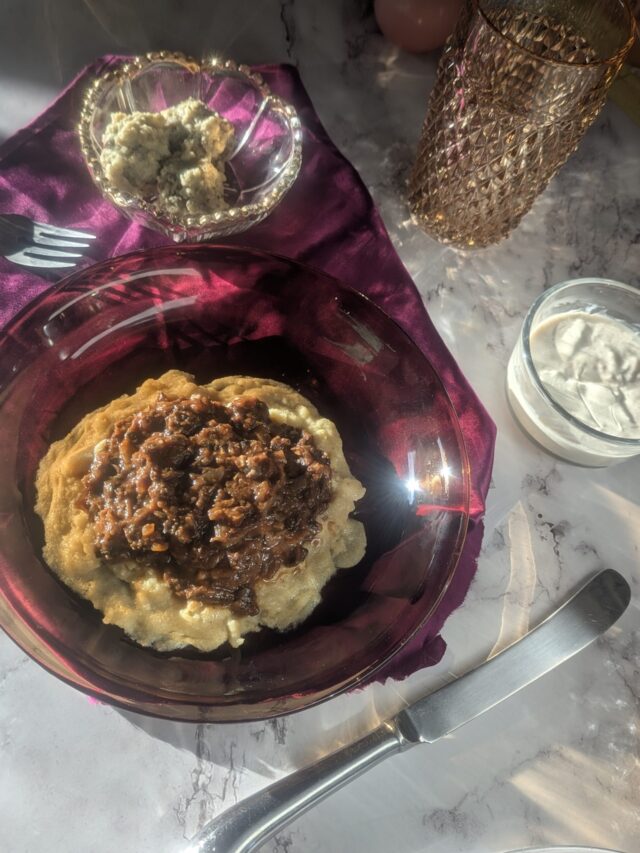
Coconut tapioca pudding is one of those desserts that quietly does a lot of work. When small tapioca pearls are fully cooked, they soften and suspend in the pudding rather than floating to the top or clumping at the bottom. The starch released during cooking thickens the coconut milk naturally, creating a cohesive texture that feels creamy without relying on eggs or heavy cream. Once chilled, the pudding holds together on a spoon and relaxes gently as you eat it, which is exactly what makes it so reliable for both serving and reheating.
The flavor profile is intentionally restrained. Coconut milk brings richness and sweetness on its own, so the dessert doesn’t need much added sugar to feel complete. Lightly infusing fresh ginger into the milk adds warmth and aroma without introducing heat or spice. Because the ginger is removed before cooking, the finished pudding tastes rounded and comforting rather than sharp. It’s the kind of flavor that feels familiar on the first bite, even if you don’t usually cook with ginger.
From a cooking perspective, this dessert is forgiving. Tapioca benefits from steady heat and patience, and doesn’t need precision timing. As long as the pearls are cooked until fully translucent, the texture takes care of itself. Cooling actually improves the structure, allowing the pudding to set and thicken naturally without any extra steps. That makes it an easy dessert to prepare alongside a larger meal, especially when oven space or attention is limited.
This is also a dessert that adapts well to different needs and preferences. Served chilled, it’s refreshing and clean. Gently rewarmed, it becomes softer and more comforting. It works equally well as a plated dessert or portioned into small cups for later in the week.
Make this Recipe for Your IDDSI Level
As written, this recipes is at IDDSI Level 5 Minced and Moist. This recipe can also be adapted for Level 3 Liquidized, Level 4 Pureed, Level 6 Soft and Bite Sized, and Level 7 Easy to Chew. See the adaptation instructions below or if you are printing the recipe, they will be included in the notes section.
Level 3 Liquidized (Smooth enough to drink or pour; no chewing): Blend the pudding slowly with milk or cream until it flows at the right rate; the only way to be sure is using a flow test (make sure you test when you’re actually eating too!)
Level 4 Pureed (Smooth and thick enough to hold shape on a spoon; no chewing): Blend the pudding with a small amount of milk or cream until smooth and easily slides off the spoon while bridging fork tines.
Level 6 Soft and Bite Sized (Tender pieces smaller than the width of fork prongs): This recipe is naturally safe for soft and bite-sized, you can go for slightly larger tapioca pearls or boba pearls.
Level 7 Easy to Chew (Foods that are soft and easily bite into pieces): You can go for traditional tapioca pearls or go for the boba pearls if you enjoy the larger bites.
Coconut Tapioca Pudding Recipe
Ingredients
Equipment
Method
- Combine coconut milk, water, and ginger slices in a saucepan. Heat gently until steaming but not boiling. Cover, remove from heat, and steep 15–20 minutes. Strain and discard ginger.
- Return infused coconut milk to the saucepan. Stir in tapioca, sugar, and salt. Bring to a gentle simmer over medium-low heat, stirring frequently.
- Cook 15–20 minutes, stirring often, until pearls are fully translucent and the mixture thickens to a soft pudding consistency. Do not rush this step.
- Remove from heat and stir in vanilla if using. Portion into cups. Cool slightly, then refrigerate at least 2 hours to fully set before serving or testing.
SLP Notes
IDDSI Texture Modifications:- Pureed 4 (PU4): Blend the pudding with a small amount of milk or cream until smooth and easily slides off the spoon while bridging fork tines.
- Soft & Bite Sized 6 (SB6): This recipe is naturally safe for soft and bite-sized, enjoy!
- Easy to Chew 7 (EC7): You can enjoy the recipe as written.
How do I…
Adjust the macros?
Protein: Stir in collagen peptides, unflavored whey isolate or Greek yogurt once off the heat.
Fat: Use light coconut milk to reduce. To increase, stir in additional coconut cream once its off the heat.
Carbs: Reduce tapioca to 1/4 cup and/or lower sugar to reduce carb count.
Make it fit my eating style?
Gluten-Free: Confirm the tapioca is just cassava/GF.
Dairy-Free/Vegan: Already vegan as written.
Make it fit my spoons?
Use minced ginger or ginger powder, being sure to strain if not removing.
Portion into cups so that you can cover and keep in the fridge for multiple nights.
Why This Dessert Works of Modified Texture Diets
This coconut tapioca pudding is a good example of how texture can do just as much work as flavor. Once the pearls are fully cooked and the pudding has time to chill, it becomes steady and predictable in the best way. It doesn’t separate, it doesn’t weep, and it doesn’t demand last-minute fixes. That reliability is what makes it such a useful dessert to keep in rotation, especially when meals are planned ahead or shared across several days.
Because the flavors are intentionally soft and balanced, this dessert fits easily alongside many different meals without feeling repetitive. The coconut keeps it comforting, the ginger adds warmth without sharpness, and the texture stays cohesive whether it’s served cold or gently rewarmed. It’s the kind of dessert that feels complete on its own but never competes with the rest of the meal.
If you’re building a menu that needs to work across different days, textures, or appetites, this pudding is an easy place to land. It can be portioned small, scaled up for guests, or adapted to a smoother consistency if needed. Most importantly, it proves that desserts designed to be dependable can still feel thoughtful, calm, and satisfying; exactly what you want at the end of a well-planned meal.
Looking for More?
If you enjoyed this dessert, try out this French custard with an apple spin. Have extra coconut milk? I love these coconut curry lentils over white rice. And speaking of rice, this horchata smoothie feels like a dessert that you can enjoy anytime.