Espresso panna cotta is at its best when it leans into bitterness rather than fighting it. Coffee brings depth and structure to an otherwise very soft dessert, giving the cream something to push against. When the espresso is strong and fully cooled before being added, it integrates cleanly without thinning the custard or messing with its set.
Panna cotta is often misunderstood as a jell-o, but its success depends on doing just enough and stopping. The goal is not a firm slice or a dramatic unmold. It should hold its shape in the cup but yield immediately to a spoon. That texture comes from using the minimum amount of gelatin necessary and allowing the dairy to do most of the work. When over set, panna cotta loses the softness that makes it feel luxurious.
This recipe was developed as part of my Italian multi-course date night + meal prep recipe set for two.
The optional milk layer plays a visual role more than a structural one. By lightening a portion of the base with additional milk, the finished dessert echoes the look of an cappucino, with a pale cap resting gently over the darker espresso layer. The layers are subtle and soft, meant to blend on the spoon rather than separate sharply on the plate. This keeps the dessert cohesive even when chilled overnight.
This panna cotta is designed to fit into real menus. It can be made early, chilled while dinner cooks, and served without last minute attention. It holds cleanly for several days, and its flavor actually improves as it rests, with the coffee mellowing slightly against the cream. Served cold, lightly tempered, or paired with another soft dessert, it finishes a meal quietly and confidently without asking for focus it doesn’t need.
Make this Recipe for Your IDDSI Level
As written, this recipes is at IDDSI Level 4 Pureed. This recipe can also be adapted for Level 3 Liquidized, Level 5 Minced and Moist, Level 6 Soft and Bite Sized, and Level 7 Easy to Chew. See the adaptation instructions below or if you are printing the recipe, they will be included in the notes section.
Level 3 Liquidized (Smooth enough to drink or pour; no chewing): Puree the finished recipe with more dairy or more espresso slowly until it flows at a rate of 2 mL in 10 seconds (learn more about the IDDSI flow test)
Level 5 Minced and Moist (Soft pieces that fit between fork prongs in a puree; minimal chewing): This recipe fits your diet texture without any changes, enjoy!
Level 6 Soft and Bite Sized (Tender pieces smaller than the width of fork prongs): Enjoy this recipe as is.
Level 7 Easy to Chew (Foods that are soft and easily bite into pieces): This recipe could be combined with another dessert, like the dark chocolate hazelnut torte recipe.
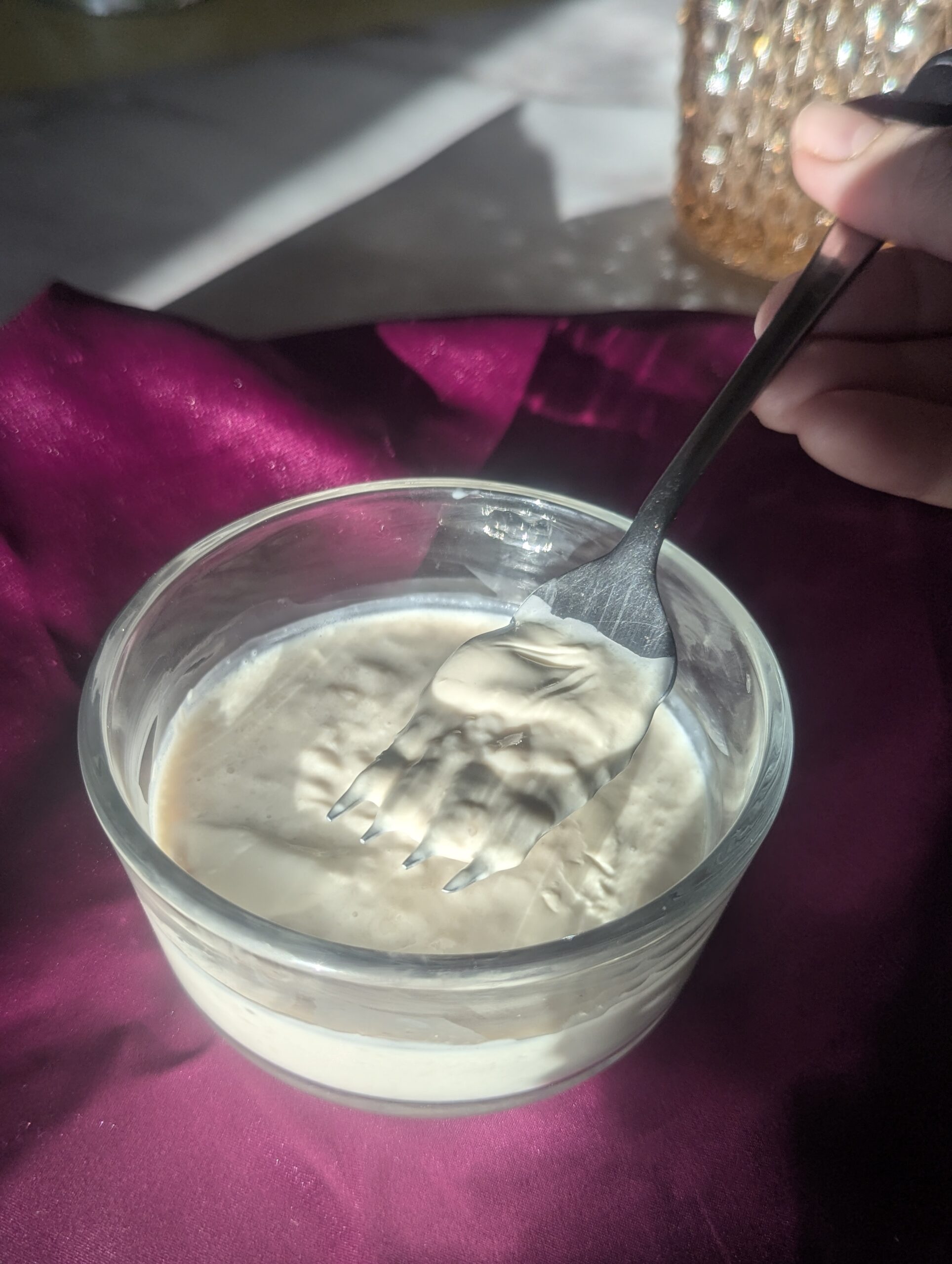
Espresso Panna Cotta
Ingredients
Equipment
Method
- In a small bowl, sprinkle gelatin over cold water and let bloom for 5 minutes.
- In a saucepan over medium-low heat, combine cream, milk, sugar, and salt. Warm gently until the sugar dissolves and the mixture is steaming but not boiling.
- Remove from heat and whisk in bloomed gelatin until fully dissolved.
- Stir in cooled espresso and vanilla.
- Divide mixture evenly among serving cups or ramekins. Refrigerate at least 2 hours, or until softly set.
- Bloom gelatin for the milk layer in cold water for 5 minutes. Warm milk and sugar gently until steaming. Remove from heat and whisk in gelatin until dissolved. Let the milk mixture cool slightly. It should be warm but not hot.
- Once the espresso panna cotta is set enough to support a layer, gently spoon the milk mixture over the top. (If you pour, it may mix the layers). Refrigerate an additional 1–2 hours until fully set.
SLP Notes
IDDSI Texture Modifications:- Level 3 Liquidized (LQ3): Puree the finished recipe with more dairy or more espresso slowly until it flows at a rate of 2 mL in 10 seconds (learn more about the IDDSI flow test)
- Minced & Moist 5 (MM5): This recipe fits your diet texture without any changes, enjoy!
- Soft & Bite-sized 6 (SB6): Enjoy this recipe as is.
- Easy to Chew 7 (EC7): This recipe could be combined with another dessert, like the dark chocolate hazelnut torte recipe.
How do I…
Adjust the macros?
Protein: Stir in some Greek yogurt (with vanilla and cooled espresso), or add whey isolate once off heat.
Fat: To lower, use half and half or milk for half of the cream. To increase, use all heavy cream, stir in mascarpone with the vanilla and cooled espresso.
Carbs: Use allulose or monk fruit to cut amount of sugar.
Make it fit my eating style?
Gluten-Free: Naturally gluten free.
Dairy-Free/Vegan: Use full fat coconut milk, replace gelatin with agar agar (must boil to activate).
Make it fit my spoons?
Skip double layer to cut waiting time in half, or blend a portion of panna cotta with Greek yogurt to achieve similar effect, testing consistency to match your level.
Chill first layer the night before to reduce babysitting.
Because this panna cotta is softly set, it behaves differently from firmer gelatin desserts as it chills and rests. The custard continues to relax over time, becoming smoother and more cohesive rather than tighter. That makes it especially forgiving if it’s made ahead or served over several days. The texture remains spoonable, and the flavor stays balanced without needing adjustments before serving.
Small choices in this recipe are what keep it reliable. Cooling the espresso before adding it protects the set. Using just enough gelatin preserves the creaminess. Letting the dessert rest rather than rushing it allows the structure to settle naturally. None of these steps are complicated, but together they prevent the rubbery or grainy textures that often give panna cotta a bad reputation.
This dessert doesn’t need garnish or contrast to feel complete. Its role is to close a meal calmly, with depth rather than sweetness and softness rather than show. Whether served on its own or as part of a planned menu, this espresso panna cotta is meant to be prepared once, held confidently, and enjoyed without effort when it’s time to eat.
Every recipe here is SLP designed for texture sensitive eaters: from dysphagia to dental issues to picky eaters. Get recipe roundups and practical tips by joining the mailing list.
Related Recipes
I could see a mocha latte vibe if you bring in this dark chocolate hazelnut torte, or enjoy a similar texture with the ambrosia salad. Or if you’re getting your day started, this blueberry almond smoothie is the right balance of bright fruit and satisfying fats with the power of Greek yogurt’s protein.