
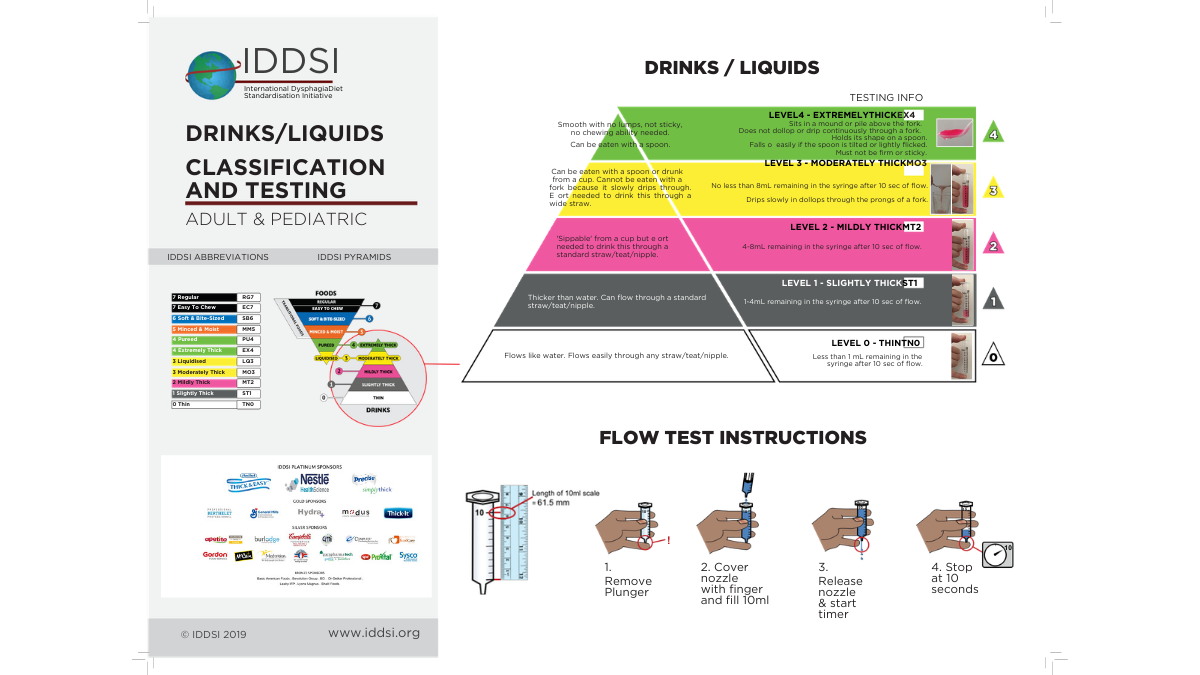
When someone is placed on a modified liquid diet, it usually follows the International Dysphagia Diet Standardization Initiative (IDDSI) framework. IDDSI classifies liquids from Level 0 to Level 4 based on how quickly they flow. These levels are used internationally, including in the United States, Australia, Canada, and the UK. This page explains what each liquid level means, how they are tested, and when they are typically prescribed.
What are IDDSI Liquid Levels?
IDDSI liquid levels were designed for a shared language around the measured thickness and flow.
- Level 0- Thin. These liquids are unthickened, so they move quickly.
- Level 1- Slightly Thick. These are just slightly slower than water and might be prescribed if swallow coordination has been impacted.
- Level 2- Mildly Thick. Moving more slowly to provide extra control, you may also have seen these called “nectar thick”.
- Level 3- Moderately Thick. Slower pouring still, older terminology used to call them “honey thick”.
- Level 4- Extremely Thick. There should be no flow to these liquids, and are often served with a spoon. It is the same texture as pureed foods and used to be referred to as “pudding thick”.
Each of these levels is determined using a standardized flow test.
How to Test Liquid Levels (IDDSI Flow Test)
Liquids are tested using a readily available 10 mL syringe. Removing the plunger, pour 10 mL of the liquid into the syringe while plugging the bottom hole with your pinky finger. Using a timer, release your pinky for 10 seconds, then replace to stop at the end of the timer. The amount remaining in the syringe determines the current IDDSI level.
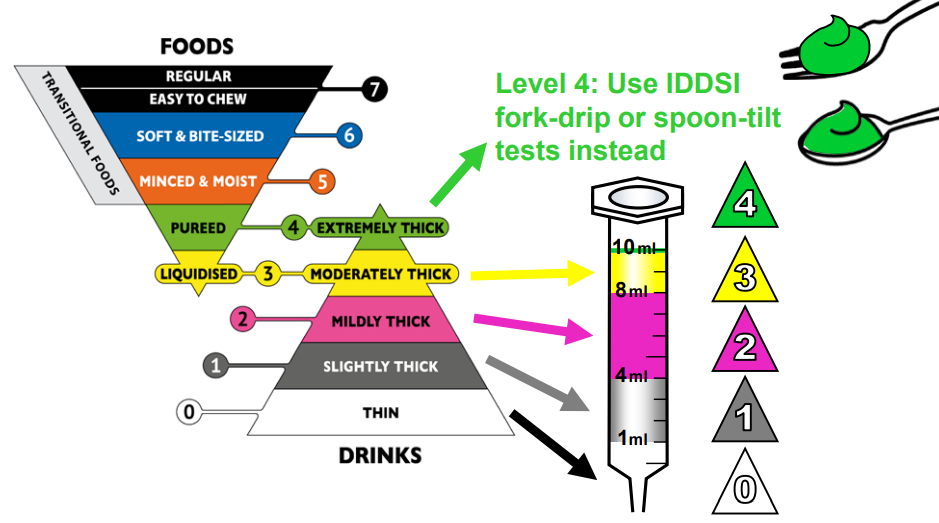
- Level 0 (Thin): 0-1mL remaining
- Level 1 (Slightly Thick): 2-4mL remaining
- Level 2 (Mildly Thick): 5-8mL remaining
- Level 3 (Moderately Thick): More than 8mL remaining
- Level 4 (Extremely Thick): Does not flow through the syringe (use spoon tilt and fork drip tests as well)
If you would like to see this in action, check out this IDDSI flow test demonstration video.
Why are Liquids Thickened?
When thin fluid moves too quickly for safe swallowing, one strategy your care team may suggest is modifying the liquid itself. Thicker liquids
- Move more slowly, as we saw the flow test
- Provide more tactile sensory feedback to the nerves that help trigger the swallow, as they need more tongue pressure to help them move
- May reduce aspiration if timing of the swallow is impaired
But, thicker liquids do also come with tradeoffs, including reduced taste, impacts on medications and dehydration risks. For a deeper look into the full picture of thickening liquids, you can see my post about the risks, benefits, and alternatives for thickened liquids.
Liquids vs Food Texture Levels
Liquids’ and foods’ texture are independent. Liquid levels (0-4) and food texture levels (3-7) have a small 2 level overlap, but can be recommended separately. For example, a person may be on level 5 minced & moist foods, but level 2 mildly thick liquids. You may also have only one of the two modified. While the IDDSI system is standardized, the way it is prescribed is not. Changing the texture is not the only way to manage difficulties; an assessment by a speech-language pathologist can help determine what strategies will support you best.
FAQs
What is the safest liquid level?
There is no universally safest level. The appropriate level depends on the individual’s swallow function.
Are thickened liquids permanent?
Liquid levels often change throughout therapy and recovery.
Can someone drink water on a thickened liquid diet?
Yes, under structured protocols such as the Frazier Free Water Protocol, that emphasizes proper oral care to reduce risk of lung infections.
Final Thoughts
IDDSI liquid levels provide a reliable way to classify any fluid anywhere with only a couple tools. Understanding the framework helps caregivers, clinicians and families
- Interpret assessment results clearly
- Prepare liquids accurately
- Keep the client safe and hydrated
While there are some liquids that naturally come at the higher levels of liquids, it is common to use commercial thickeners like starches or xanthan gum. I have also developed liquidized (IDDSI level 3) and pureed (IDDSI level 4) recipes that can be used in managing dysphagia.
Looking for more?
Looking for general information about IDDSI? Start with the What are IDDSI levels post. Want help checking your work in the kitchen? Check out the IDDSI resource page to see more video examples for the food levels.
Every recipe here is SLP designed for texture sensitive eaters: from dysphagia to dental issues to picky eaters. Get recipe roundups and practical tips by joining the mailing list.
Recipes by Texture
Written by a licensed speech-language pathologist with over a decade of clinical experience in dysphagia.