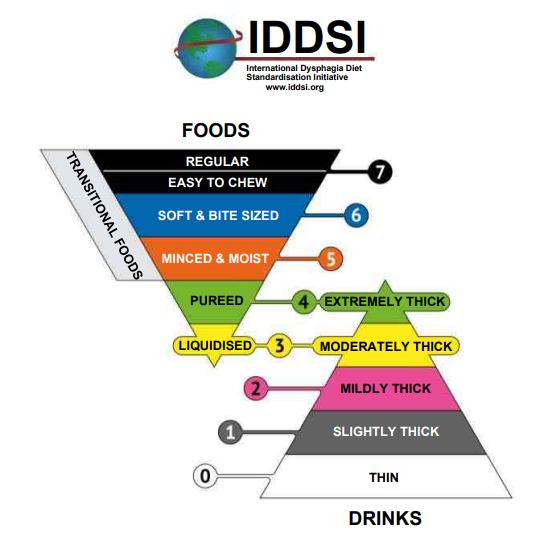
IDDSI (the International Dysphagia Diet Standardisation Initiative) was created to give everyone like clinicians, caregivers, food service staff, and home cooks a shared language for texture. Before IDDSI, “soft,” “pureed,” or “thickened” meant something different in every kitchen and every facility. Now the levels are standardized, the tests are simple, and the goal is the same: to make eating safer and more predictable for people with swallowing challenges.
The system breaks food and drink down into numbered levels with specific tests you can do at home. You don’t need special equipment. Common kitchen utensils like a fork, spoon, chopsticks (or even with your fingers!) cover almost everything. Instead of guessing whether something is “safe,” you can check how it moves, how it holds shape, and how easily it breaks apart.
Videos
If you are completely new to IDDSI, you may find some interest in this 5 minute video summarizing the reason why IDDSI was developed, but the functional information about testing using the framework with your meals are in the 201 course below. I have included links that let you jump to the specific topic that you need.
Testing IDDSI Levels
Click links for your specific testing needs
Food Size Assessments
– Soft and Bite-Sized to reduce choking risk
– Minced and Moist for reduced chewing ability
Spoon Tilt Test
– Purees that aren’t too thick
Fork Pressure Test for IDDSI levels 5-7
Fork/Spoon Separation Test for levels 6-7
Chopstick/finger-based Assessments
Liquid Flow Testing for levels 3-0 with 10ml syringe(s)
Fork Drip Test for levels 3-5
– Moderately Thick Liquids Level 3
– Purees Level 4
– Minced & Moist Level 5
Each Level, at a Glance
Pureed (IDDSI Level PU4)
What this level means: No chewing required, its smooth while holding its shape
How it tests:
– Holds shape on a spoon but slides off easily without leaving a thick layer behind
– Will mound on top of the prongs of a fork but it doesn’t drip through
What it should feel like: pudding-like, where it doesn’t feel sticky or like a glue, but holds together as a single bite vs flowing
Kitchen Hacks:
– Add liquids to items you want to puree slowly, and test as you go with the kitchen utensils (fork, spoons, chopsticks) you already have available.
– Use a tiny bit of fat (cream, butter, oil) to create a creamy, smooth mouthfeel while adding moisture.
Red Flags:
– Sticky “peanut butter” textures
– Visible particles
– Thin sauces separating from the solids
Full Pureed Level 4 Recipe Collection
Minced & Moist (IDDSI Level MM5)
What this level means: 4mm pieces that hold together with no separate liquids
How it tests:
– Piece fit between standard fork tines
– A bite will change shape with only light pressure (less than a blanched fingernail)
– Mounds on top of fork without separate sauce or pieces crumbling off
What it should feel like: easy mashed by the tongue and moist enough not to scatter when scooped.
Kitchen Hacks:
–Pregel bread items with sauces
– Low and slow cooking for meats means easier processing later
– Rather than on top, use sauces as the binder
Red Flags:
– Dry crumbles
– Mixed textures (soup broth + solids that need chewing)
– Intact skins and fibers
Full Minced and Moist Level 5 Recipe Collection
Soft & Bite-Sized (IDDSI Level SB6)
What this level means: Small pieces (<15mm for adults) that are tender
How it tests: Breaks easily with the side of a fork; no tough skins, strings or seeds
What it should feel like: Very tender (doesn’t need to “bite off”, but does require chewing)
Kitchen Hacks:
– braising meats or pressure cooking helps lock in moisture
– Use the lower level textures to create safe variety
Red Flags:
– Crisp coatings
– Bread crusts and dry centers
– Raw vegetables
– Overcooked meat
Full Soft and Bite Sized Level 6 Recipe Collection
Easy to Chew (IDDSI Level EC7)
What this level means: No specific piece sizes, but must be tender and requires ability to bite off and minimal chewing to safely swallow
How it tests: Breaks easily apart with a fork, with no hard crusts
What it should feel like: Gentle bite with no surprises
Kitchen Hacks:
– Marinating and using wet heat help tenderize meats and fibrous veggies
– Use the lower level textures to create safe variety in the meal
– Preprocess foods into smaller pieces to allow greater breakdown during cooking
Red Flags:
– Thick skins and crisp coatings
– Dense, raw fruits and vegetables
– Popcorn with corn hulls
– Charred and overcooked meat
Transitional Foods (IDDSI Levels 5-7)
What this level means: Foods begin as solid but under moisture and light tongue pressure, will melt in the mouth.
How it tests: Flattens and melts under light fork pressure after moistened.
What it should feel like: If you hold it on your tongue tip and press into roof of your mouth, it will disintegrate
Looking for more?
You don’t have to sacrifice safety when you’re hungry on your travels. Check out the Same Menu soft fast food guide. Learn more about the decision to follow a recommendation for thickened liquids.
Every recipe here is SLP designed for texture sensitive eaters: from dysphagia to dental issues to picky eaters. Get recipe roundups and practical tips by joining the mailing list.
Recipes by Texture
Written by a licensed speech-language pathologist with over a decade of clinical experience in dysphagia.