
Minced & Moist (IDDSI Level 5)

Soft foods that are finely chopped and held together with moisture so they don’t crumble or fall apart.
When I first started adapting recipes for people with dysphagia, I noticed how often soups were the go-to “safe” choice, but with dysphagia, the truth can a bit more complex. Smooth purees have their place at Liquidized (IDDSI level 3), but soups that have a mixture of liquid and solids are actually one of the more challenging items.
This Squash and Sausage Casserole bridges that gap. It’s designed for Minced and Moist (IDDSI Level 5), meaning it’s soft, moist, and cohesive, but it also satisfies with the flavors: the sweetness of roasted squash and apple, the richness of cream, and the savory depth of mushrooms and sausage. If you’re cooking for a household with softer texture needs, this dish won’t require biting and has easy to chew texture that can help sensitive mouths.
This recipe started as my fall squash soup, which was never made the same twice. Whatever fruits or vegetables were available at the farm stands could work. I have made it with delicata, acorn, butternut, pumpkin, and kabocha squash, I have sometimes included some root veggies like carrots. For fruits, I have gone with pears in the past but due to the grit and firmness, even when peeled and baked, I would recommend apples to achieve a predictable final texture. I have also played with the different types of sausage I add, and the mushrooms alone add a delicious level of plant-based meatiness to round out the dish.
One of the challenges with Level 5 recipes is controlling moisture so the dish stays cohesive instead of drifting back toward “soupy.” Squash can release a surprising amount of liquid once heated, and mushrooms do the same. That’s why this casserole starts with roasting: you’re evaporating excess water before folding everything together. Roasting also builds flavor without relying on browning that might create tougher edges. The end result is a base that stays predictable spoon to spoon, instead of separating into liquid and solids during serving.
The fat in the sausage, cream, or plant based alternatives you choose also plays a role in texture. Fat helps the bite “slide” without feeling thin, and it helps bind the small particles that define minced & moist. If you’re adapting this for someone post bariatric surgery, keeping the fat content moderate but present can help tolerance while still offering a satisfying meal. For dysphagia specifically, even distribution matters more than richness. Quinoa brings structure without chew. It softens into tiny, hydrated beads that hold moisture well and stay within IDDSI particle size even after stirring. If quinoa isn’t a household favorite, cooked millet, couscous, or even a scoop of cooked rice mashed lightly with a fork can play the same role. The goal is simply to add a mild grain that reinforces cohesion without introducing any separate textures.
This is also one of those dishes that reheats beautifully, which matters in real life. Texture modified meals need to perform when cold, warm, and hot, because temperature swings can change thickness, mouthfeel, and how cohesive a dish remains. Squash based casseroles are forgiving that way: they reheat to the same softness without drying out or separating, especially if you keep the oven or microwave gentle and stir to redistribute moisture.
Finally, there’s the bigger picture, why recipes like this matter. When someone moves into softer textures, it can feel like their world gets smaller. Familiar flavors and seasonal ingredients help expand it again. A casserole like this gives you the warmth, comfort, and aroma of soups without the unpredictability of mixed textures. It’s a way to keep the table unified and the cooking process simple, and that combination is what tends to help families stick with texture modifications long term.
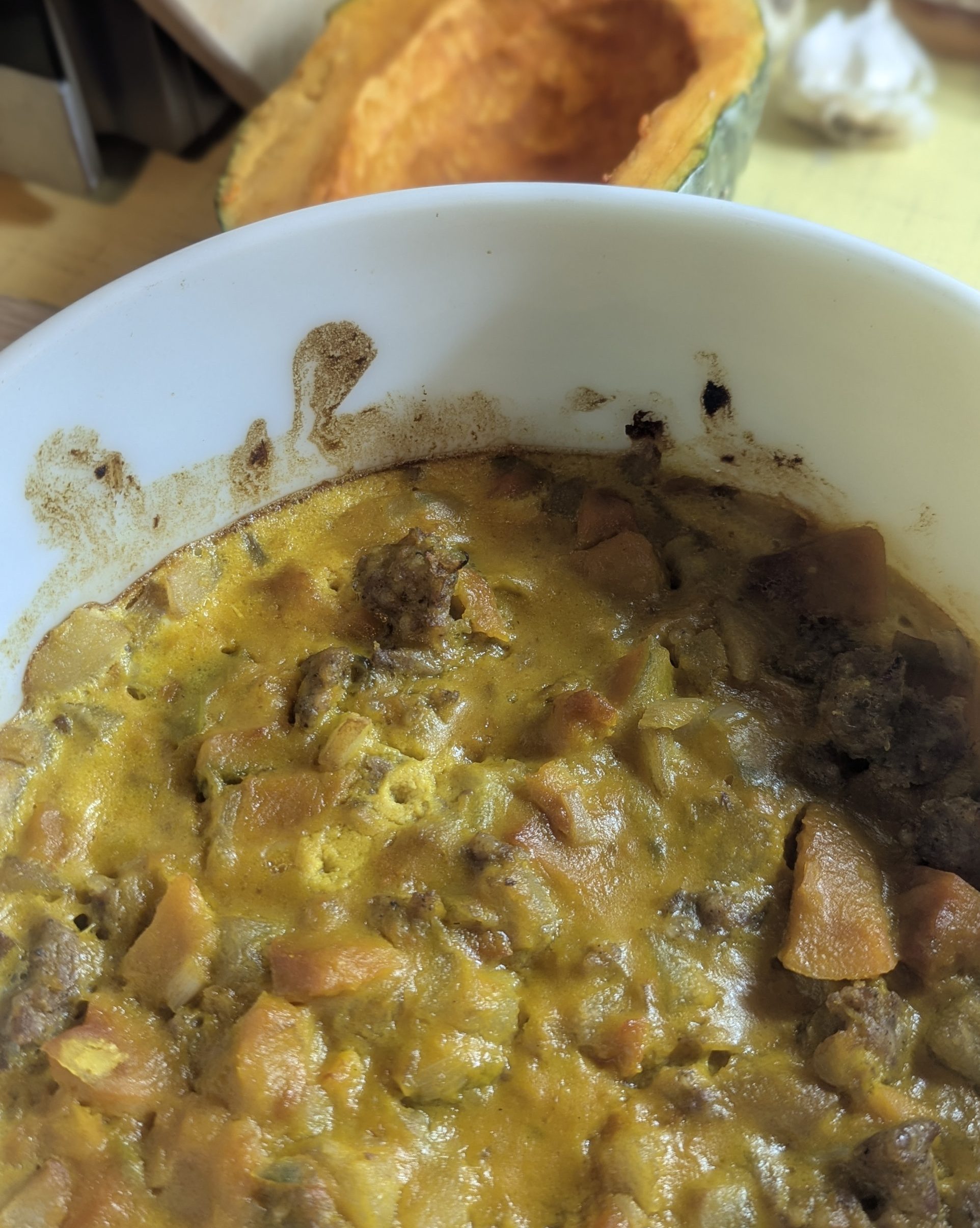
Squash and Sausage Casserole Recipe
Ingredients
Equipment
Method
- Preheat oven to 375°F (190°C). Lightly grease a 9×13-inch baking dish.

- Spread cubed squash, cubed apples, and sliced shallots across a large sheet pan. Drizzle with oil and sprinkle with salt. Toss lightly to coat. Roast for 25 minutes.
- Keeping the oven on, slide vegetables to one side of the sheet pan. Add the mushroom quarters and crumble the breakfast sausage onto the empty half of the pan. Return to the oven for 10–12 minutes, or until sausage is cooked through and vegetables are extremely soft.

- Transfer everything from the sheet pan into the prepared casserole dish. In a measuring cup, whisk together the milk, eggs, additional salt, and optional seasonings. Pour into the casserole dish and stir gently to combine.

- Smooth the top and bake 20–25 minutes until the casserole is set and fully fork-mashable. Cool slightly before slicing into 8 soft, easy-to-chew portions.
Video
SLP Notes
- Puree 4 (PU4): Blend squash with cream, blend the sausage, shallot and mushroom. Consider layering the two purees to allow for selecting bites.
- Soft & Bite-sized 6 (SB6): Recipe is naturally soft and bite sized, keep pieces <15mm.
- Easy to Chew 7 (EC7): Recipe is already easy to chew, enjoy.
- Protein: Add 1/2 cup of egg whites to add 6g of protein per serving.
- Fats: Use reduced fat milk and lean turkey sausage to decrease, full fat and pork sausage if trying to increase.
- Carbs: You can swap part of the squash for equal parts riced cauliflower.
- Gluten-free: Naturally gluten free, enjoy.
- Dairy-free/Vegan: Use your favorite plant-based milk and tofu/plant crumble.
Why this squash casserole works for dysphagia diets
This casserole keeps the heart of a soup, the warmth, comfort, and moisture, but adds gentle body so that it can be served on a fork or spoon. Each element plays a role: The squash and apple provide natural sweetness. The mushrooms and sausage bring protein and umami, making it feel like a complete meal, especially with the quinoa.
Texture-modified eating doesn’t have to mean eating alone, or eating differently. When you can adapt one recipe to suit everyone’s needs, you create connection and dignity, one shared meal at a time.
Whether you’re managing dysphagia, caring for someone who is, or simply exploring softer meals for comfort, this squash casserole is a perfect place to start: familiar, nourishing, and adaptable.
Every recipe here is SLP designed for texture sensitive eaters: from dysphagia to dental issues to picky eaters. Get recipe roundups and practical tips by joining the mailing list.
Leave a Reply