
Minced & Moist (IDDSI Level 5)

Soft foods that are finely chopped and held together with moisture so they don’t crumble or fall apart.
Tropical fruit and citrusy sweetness mingle with a protein fortified whipped topping to bring chewing ease to this nostalgic minced and moist ambrosia. Ambrosia salad first gained popularity in the late 19th and early 20th century in the American South. The name “ambrosia” comes from Greek mythology, where it was the food of the gods, symbolizing luxury and delight. For home cooks, it was a way to turn simple pantry items of canned fruit, coconut, and marshmallows into a celebratory dish. You’ll still find it on many holiday tables, especially at Thanksgiving, Christmas, and Easter, because it bridges the gap between fruit salad and dessert.
The Sensory Appeal of Soft Desserts
There’s something deeply satisfying about a dessert that feels cool, creamy, and balanced. Ambrosia has that built-in sensory contrast: bright citrus against soft sweetness, gentle chew from coconut, and the light aeration from whipped topping. For people who need easy to chew or texture modified foods, those contrasts can be recreated without relying on crunch or resistance. My minced and moist (IDDSI level 5) ambrosia is a perfect example of “safe texture, full experience.” It delivers texture, aroma, and flavor variation without compromising control.
Ambrosia vs. Watergate Salad
Ambrosia is often confused with another retro favorite: Watergate salad. While both are creamy fruit-based salads, they’re not quite the same. Ambrosia typically relies on yogurt or whipped cream folded with canned fruits, coconut, and sometimes marshmallows. Watergate salad, on the other hand, was born in the 1970s and is built around pistachio pudding mix, crushed pineapple, mini marshmallows, and whipped topping. Watergate has a distinct pale green color and a nutty flavor, while ambrosia stays more fruity and fluffy.
When this Texture Works Best
Minced & Moist (IDDSI Level 5) works best when chewing endurance is limited but some tongue control is still present. Ambrosia salad fits this level well because the fruit is finely chopped, the texture is cohesive, and the creamy base helps everything move together as a single bolus rather than separating in the mouth.
This texture is especially helpful for people who fatigue quickly with chewing, struggle with dry or crumbly foods, or have difficulty managing mixed textures. The moisture from the whipped base reduces the need for repeated chewing and helps prevent small pieces from scattering.
Level 5 is also a good option during transition phases. It can feel more familiar and socially “normal” than purées while still offering a high margin of safety. For shared meals, this ambrosia salad often works for multiple people at the table, making it easier to eat the same dish without calling attention to texture modifications.
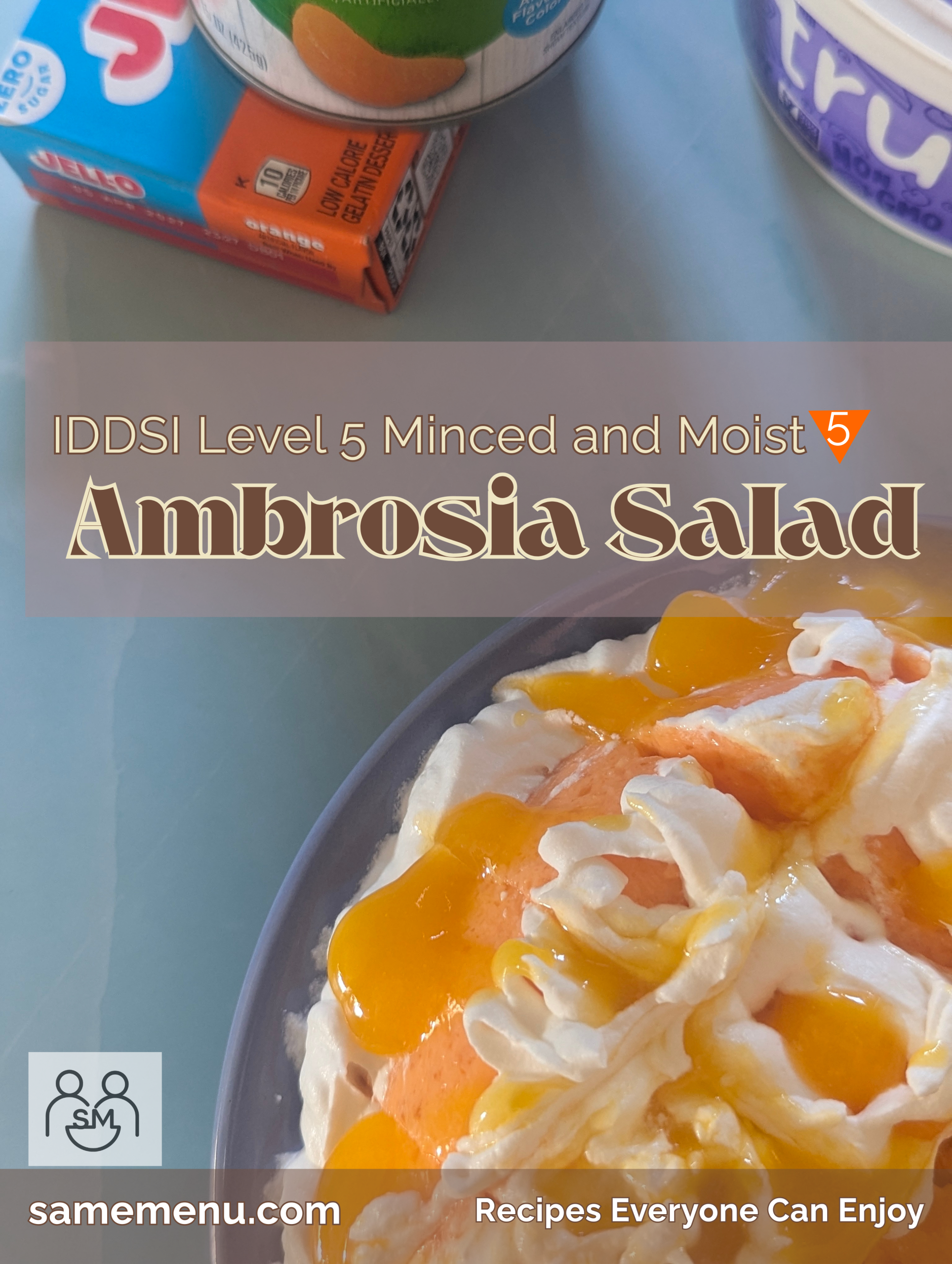
Ambrosia Salad Recipe
Ingredients
Equipment
Method
- In a heatproof bowl, stir gelatin powder into ½ cup boiling water until fully dissolved (2 minutes). Stir in ½ cup cold water. Let gelatin sit at room temp for 10–15 minutes, until lukewarm. (Too hot and it will melt your Cool Whip/yogurt; too cold and it will set before you can fold.)
- Well drain and finely mince fruits. In a large bowl, whisk together yogurt and Cool Whip until smooth.
- After cooling time, slowly fold the lukewarm gelatin into the yogurt mixture until evenly blended. Stir in the minced, well-drained fruit.
- Cover and refrigerate 2-3 hours, or until the mixture is softly set and spoon cohesive. Optional: thicken fruit juices to gel for decoration and top with a dab of Cool Whip.
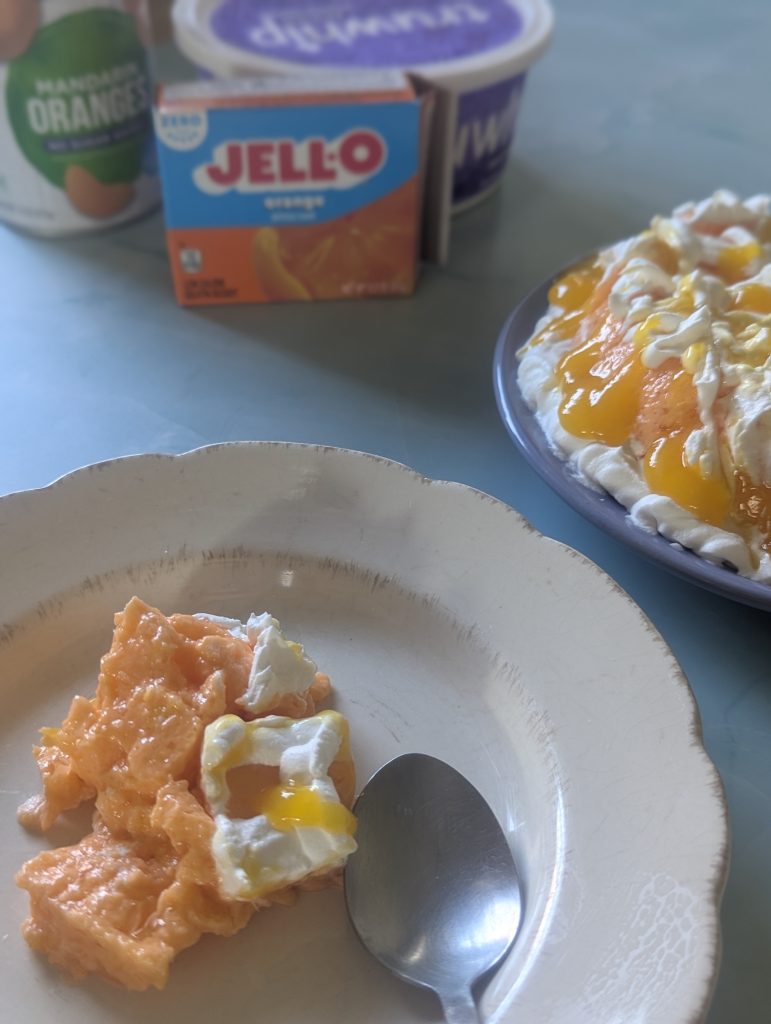
- For testing: Scoop with a spoon and let it mound slightly. It should hold shape, be easily mashed with the tongue, and not separate into liquid or dry bits. For the fork pressure test, press a sample against the plate with the back of a fork. It should squash easily and remain cohesive. It should not drip through the prongs of the fork.
SLP Notes
IDDSI Texture Modifications:- Pureed (PU4): Blend well and strain prior to serving to ensure no separate liquids or lumps.
- Soft & Bite-sized 6 (SB6): Crushed pineapple may offer ready to go from the can for this level, but just be sure to test before adding.
- Easy to Chew 7 (EC7): Pineapple tidbits are often at an easy to chew level, but it is still high fiber so if feeding children or people that have difficulty protecting airway, crushed (or hand processed) pineapple is highly recommended.
- Protein: Use Greek yogurt over the sour cream, you can add a scoop of vanilla protein powder for even more.
- Fats: For higher fat content, full fat dairy is recommended. To decrease, use lower fat dairy or skip entirely.
- Carbs: Use sugar-free gelatin and reduce Cool Whip by half (you can swap some low sugar whipped topping to replace).
- Gluten-free: Double check your whipped topping and gelatin labels, but should be naturally GF.
- Dairy-free/Vegan: Use agar-based gelatin (or Konjac jelly comes in simple pouches that you don’t have to set) and vegan whipped topping (or a small amount of coconut cream); swap sour cream with coconut yogurt.
Why This Version Works for Minced & Moist Diets
The beauty of ambrosia lies in how naturally it fits into softer diets. Most of its ingredients already have an appropriate texture; canned fruit, yogurt, and whipped topping are naturally moist and easy to manipulate. The key is what happens during preparation. Finely mincing fruit and thoroughly draining excess syrup prevents excess liquid, while a light set from gelatin or instant pudding base ensures each scoop holds together on a spoon.
Serving and Presentation
Especially with modified texture diets, presentation matters. You can use piping tips to create visual interest, piping decoration on the full salad or creating designs for the individual servings. Serving chilled in individual clear dishes or cups can help highlight the fruits colors and can be presented in a layered manner.
A Modern Take on a Classic
What makes ambrosia worth revisiting is that it’s endlessly adaptable. You can lean traditional with oranges, pineapple, and coconut, or make it more modern with seasonal fruits like peaches or berries (well minced and deseeded). Adding fortified ingredients such as protein rich yogurt or nutrient dense toppings keeps this vintage dish relevant for today’s kitchens, where taste, nostalgia, and nutrition all matter.
Ready for seconds?
This recipe was developed with GERD friendly ingredient choices. Check out the growing list. If you’re a coconut lover, be sure to check out these Minced and Moist Coconut Curry Lentils. Or find more delicious desserts across all diet textures here.
Every recipe here is designed for texture sensitive eaters: from dysphagia to dental issues to picky eaters. Get recipe roundups and practical tips by joining the mailing list.
Recipes by Texture
I currently donate my time and expertise to create Same Menu recipes. If you want to support me, please consider doing your online shopping using my links. As an Amazon Associate I earn from qualifying purchases. Thanks for your contribution!
Leave a Reply