
Pureed (IDDSI Level 4)

Completely smooth foods/extremely thick liquids with no lumps that hold their shape on a spoon and don’t require chewing.
Chilaquiles are one of those dishes that feel inherently comforting: tender pieces of tortilla simmered in sauce until they soak up the liquid, layered with tangy toppings and warm aromatics. They already sit close to the softer end of the texture spectrum, which makes them an easy choice to include in my dysphagia friendly recipe adaptation to Pureed (IDDSI Level 4) diet texture.
Pregelled starches work because they’ve already undergone the first stage of gelatinization; the phase where starch granules swell, absorb water, and transition from firm to soft. When you hit a tortilla with moisture and heat ahead of time, whether through steaming, soaking, or a controlled simmer, you can lock in that tenderness before the dish comes together. That means your tortilla pieces won’t have hard edges, won’t need bite pressure, and won’t surprise anyone with inconsistent chew. For chilaquiles, it creates a version that holds its identity while being safer and more predictable for softer eating.
The peach guacamole brings brightness without relying on sharp acidity. Peaches offer gentle sweetness and a soft, easily mashable texture that blends seamlessly with ripe avocado. When folded together, the mixture adds body without introducing stringy fibers or raw vegetable crunch. And if you want a variation geared toward people who need higher protein or more satiety, a sausage puree or a spoonful of Greek yogurt can be whisked in for a creamier, more stable guacamole topping.
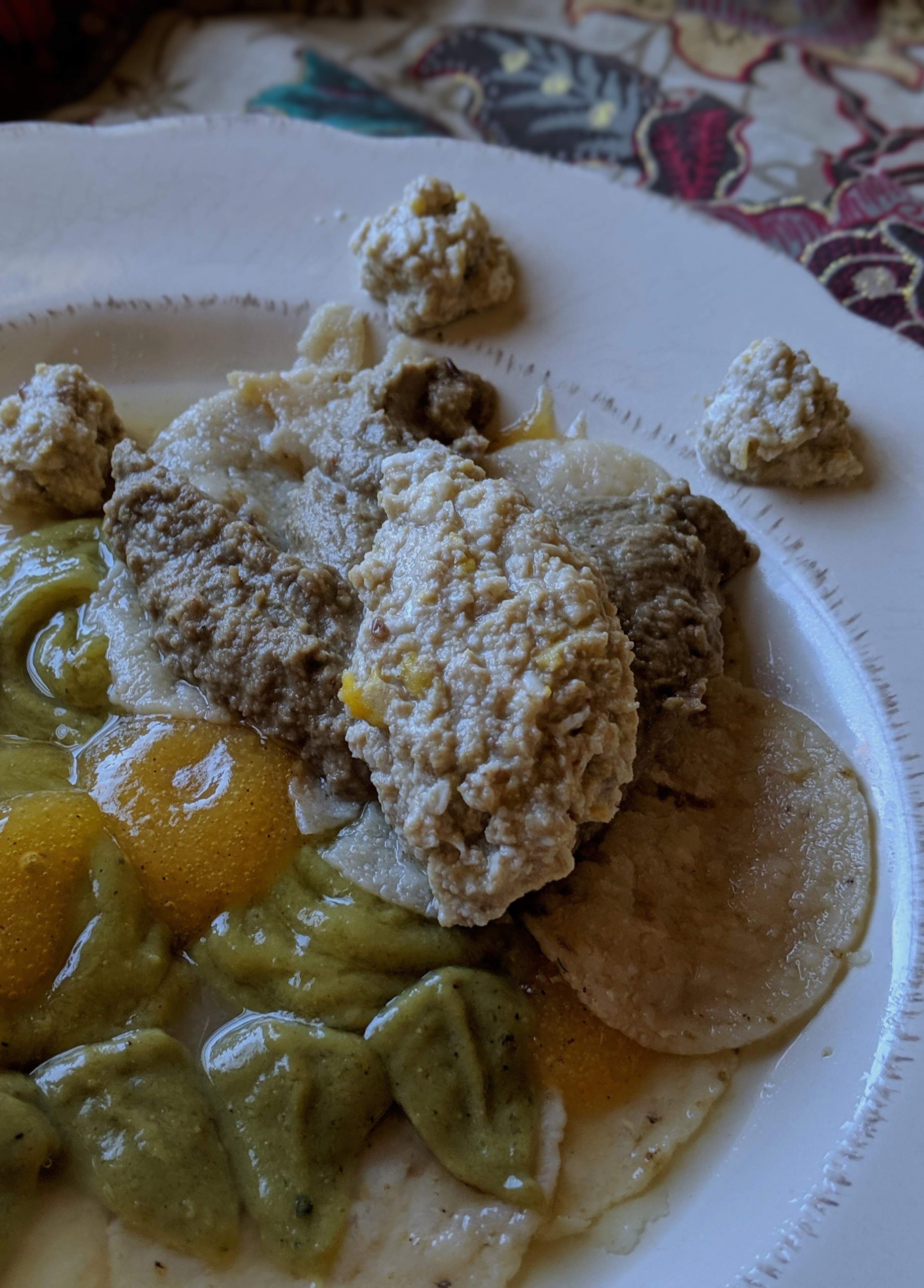
Peach Guac Chilaquiles Recipe
Ingredients
Equipment
Method
- Cut the tortillas into thin strips. Heat the broth over medium high heat and add garlic powder, smoked paprika, and salt. (If you want to save cooking time, pour broth over chips and refrigerate for at least 1 hour.) Add the tortillas and eggs, bring down to simmer for 10-12 minutes, stirring occasionally, to prepare for puree.
- Over medium heat to avoid crisping. add minced shallot, minced peach, and optional diced tomato to a pan and cook 5–7 minutes, stirring occasionally. Remove from pan and cool briefly before blending into puree.
- In a small bowl, mash the avocado with sour cream until smooth and creamy. Stir half of the peach–shallot mixture into the guacamole cream to lighten and warm it.
- If you haven't already, plate the tortillas. Consider using piping, patterns or emulating the shape of the food prior to processing for improving choice of bites and visual presentation.
- Warm 1–2 minutes on low heat if needed. Serve warm with optional pureed meats or cheeses, testing all components for puree texture.
Video
SLP Notes
Testing Method: This recipe should pass the spoon tilt and fork drip tests defined by the International Dysphagia Diet Standardization Initiative (IDDSI). The puree should sit in a mound on a spoon, sliding off in one bite when tilted/ lightly flicked, with no thin liquid separating. The puree should sit on top of a fork and should not drip through the fork tines (small “tail” is ok). Adjusting Consistency: If the mixture is too thick, add small amounts of liquid (broth, sauce, milk, or water) one teaspoon at a time. If too thin, add a thickening ingredient such as instant potato flakes, pureed vegetables, or thickener as clinically appropriate. Temperature Caution: The viscosity of purees changes with temperature. Always test after reheating or chilling, as thinner or thicker consistencies may alter the IDDSI level. Storage & Reheating: Refrigerate promptly and reheat gently, stirring between intervals. Always retest consistency before serving.How do I…
Make it fit my texture?
Minced and Moist: Finely mince the tortillas into <4mm pieces, you will not need to blend into purees. Finely mince the peaches and tomatoes, mixing with the creamy guacamole to achieve a cohesive texture.
Soft and Bite Sized: Dice tortillas, peaches, and tomatoes into 15mm pieces.
Easy to Chew: Enjoy, this recipe is naturally easy to chew.
Adjust the macros?
Protein: Add meats like sausage, chicken or plant based via pureed white beans or silken tofu in the sauce to fortify the dish.
Fat: Use extra avocado or avocado oil to increase, or halve avocados and/or skip cheese. Use soft tortillas over chips.
Carbs: Use half chips, half roasted zucchini or eggplant slices.
Make it fit my eating style?
Gluten-Free: Use certified GR corn tortillas or chips (wheat blends are out there). Bouillon cubes are another hiding spot for gluten, along with some broths.
Dairy-Free/Vegan: Replace dairy with your favorite plant based version and replace with nutritional yeast or smoked paprika to get more savory depth.
Make it fit my spoons?
Use store bought guacamole (testing with all other items), blend in canned drained peaches.
Pregel the tortillas with liquids in advance, covering with liquid and then sealing for an hour to overnight.
What makes this dish interesting is the push-pull of savory and sweet. Peaches aren’t traditional, but fruit has long been woven into regional Mexican cooking; salsas with mango, pineapple, or dried fruits in moles. Their inclusion here isn’t a novelty; it’s a way to maintain balance when you need to keep textures gentle. The peach rounds out the spice of the sauce, keeps the guacamole moist without relying on citrus, and creates a familiar comfort food richness that blends well with softened tortillas.
From a dysphagia standpoint, chilaquiles also behave well once cooled slightly. The sauce continues to hydrate the starch, and the dish settles into a cohesive, forkable texture. That’s especially helpful for mixed-needs households or for anyone who wants a meal that’s safe, flavorful, and not obviously texture modified. It’s also a strong option for people in early post-bariatric stages or after a dental procedure when soft, moist meals are encouraged and acidity tolerance varies from person to person.
More Recipes
If you need a pureed dessert recipe, I love this pureed chocolate pumpkin cheesecake recipe. Or if you’re looking for a sweet breakfast option, this banana sweet potato breakfast bowl recipe is in regular rotation at my house.
Every recipe here is designed for texture sensitive eaters: from dysphagia to dental issues to picky eaters. Get recipe roundups and practical tips by joining the mailing list.
Leave a Reply