Easy to Chew (IDDSI Level EC7)

Regular foods that are naturally soft and easy to chew, without tough, dry, or hard components.
Deviled eggs have lasted for a reason. Eggs are one of the few foods that deliver high quality protein, fat, and micronutrients in a very small package, which makes them especially valuable when appetite or energy for eating is low. For people who struggle to finish larger portions, eggs offer meaningful nutrition without requiring much effort. The soft texture, natural emulsifiers in the yolk, and ability to hold moisture make them a reliable option when texture matters as much as flavor.
This easy to chew version keeps that familiar foundation while borrowing flavor cues from a recent trend on social media. The viral Asian cucumber salad works because it balances richness with freshness and umami, and those same ingredients translate naturally into a deviled egg filling. Sesame oil brings aroma, soy sauce adds depth, and cucumber lightens the profile without adding a hard crunch (and you can add some spice too if you enjoy it, not cooking for GERD). The result still reads as a party classic, but with a more modern seasoning.
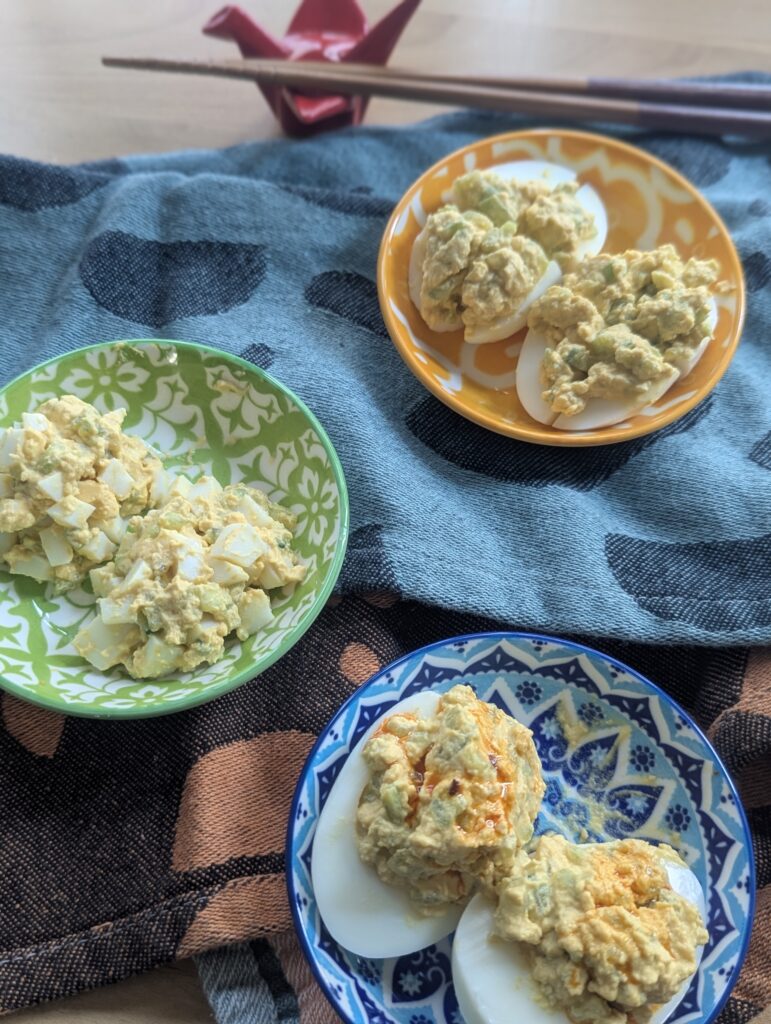
The biggest challenge with adding cucumber to deviled eggs isn’t flavor, it’s water. Cucumbers hold a surprising amount of liquid (also known as dual consistency) and when that moisture is released into the yolk mixture, the filling can loosen quickly. What starts out smooth and cohesive can become slumpy and wet within hours, especially once chilled. This is a common reason cucumber based fillings feel unstable or messy on the plate.
The fix is simple but essential. Removing the seeds, mincing the cucumber very finely, and pressing out excess moisture before folding it into the yolks keeps the filling structured and spoonable. That one extra step preserves the integrity of the egg mixture without needing additional binders or thickeners. The filling stays smooth, holds its shape, and tastes clean rather than diluted. This is especially important when making a larger batch for multiple servings.
These sesame cucumber deviled eggs are meant to feel familiar and useful, not novelty driven. They respect the role deviled eggs have always played as an accessible, nourishing option, while updating the seasoning in a way that feels current. When small details like moisture control are handled upfront, the result is a dish that holds up well, travels well, and continues to make sense long after the party plate is cleared.
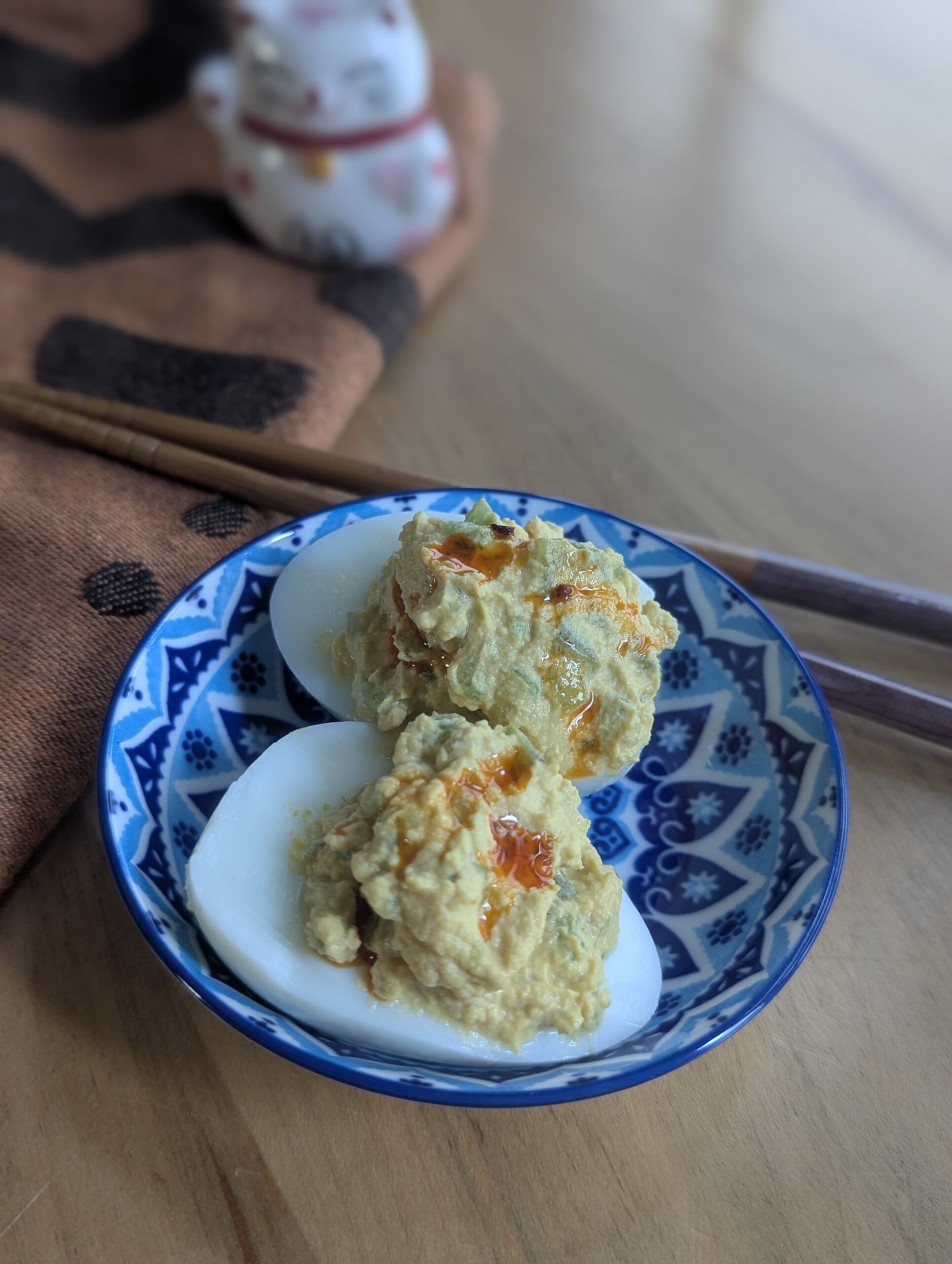
Sesame Cucumber Deviled Eggs
Ingredients
Equipment
Method
- Place eggs in a saucepan and cover with cold water. Bring to a boil, then cover, remove from heat, and let stand 10 minutes. Transfer to ice water and cool completely. Peel eggs and slice in half lengthwise. Remove yolks and place them in a mixing bowl. (If toasting your own sesame seeds, you can use the same saucepan once you dump the water)
- Prepare the cucumber by removing seeds and peeling. Mince extremely finely, then press gently in a towel to remove excess moisture. This step is essential for maintaining a safe cohesive filling.
- Mash egg yolks until smooth. Add mayonnaise, sesame oil, soy sauce, rice vinegar, sugar, and white pepper. Stir until fully blended. Fold in the prepared cucumber until evenly distributed and smooth. Spoon or pipe the filling back into the egg whites.
SLP Notes
IDDSI Texture Modifications:- Pureed 4 (PU4): Blend the egg whites first separately, then you can blend the yolks with the remaining ingredients, taking the opportunity to spoon or pipe to make the puree resemble the egg.
- Minced & Moist 5 (MM5): Mince the egg whites into 4mm pieces and then fold into the yolk fully.
- Soft & Bite-Sized 6 (SB6): Simply cut the finished eggs into 15mm pieces and enjoy!
How do I…
Adjust the macros?
Protein: Boil and blend 2 more egg whites into the fillings themselves, mix in Greek yogurt.
Fat: Replace half (or all) of the the mayo with Greek yogurt, use light mayo or use less total filling per egg. To increase, use full fat mayo or add a spoon of mashed avocado to the filling.
Carbs: Skip the sugar or replace with allulose, monk fruit, other low glycemic sweeteners.
Make it fit my eating style?
Gluten-Free: Use tamari instead of soy sauce, confirm mayo and vinegar are certified GF.
Dairy-Free/Vegan: You can use steamed/boiled potatoes in place of eggs, vegan egg replacement, vegan yogurt or mayo for creating the filling.
Make it fit my spoons?
Use store-bough hard-boiled eggs
Purchase seedless cucumbers
Serve as an egg salad to skip reassembly.
When deviled eggs work well, they tend to disappear quickly. This version stays approachable for a wide range of eaters while still offering something a little different from the standard mayonnaise-and-mustard profile. Small adjustments make the difference here. Treating the cucumber prevents the sogginess that often undermines otherwise good deviled eggs. That attention to moisture control keeps the texture consistent from the first bite to the last, even after chilling or transport.
These deviled eggs are meant to be practical. They hold their shape, adapt to different texture needs, and fit easily into meals where energy or appetite may be limited. Whether served at a gathering or prepared ahead for the week, they offer a familiar format with enough thought behind it to make them reliable.
What’s Next?
Continue exploring Asian cuisine with the sushi bowl with edamame hummus. Extra eggs? These poached eggs in red wine are a fun French recipe that has limited ingredients (and leftover wine, any takers?). Need a dessert to finish this meal? My coconut tapioca pudding is another Asian fusion with classic picnic foods that offers a flavor upgrade.
Every recipe here is designed for texture sensitive eaters: from dysphagia to dental issues to picky eaters. Get recipe roundups and practical tips by joining the mailing list.