If you have ever witnessed a bite of food that was supposed to be “safe” feel less than, you may already know the quiet truth that’s not outwardly intuitive.
Soft does not always mean easy to swallow.
For many people, the first moment does not need some extravagant bite, it can be with one of your familiar pantry staples, same setting as last night. That disconnect is confusing, and can be a logical place where fear can creep in.
This article is here to bridge that gap. Not from a medical textbook. Not from a place of panic. From the lived space between “I never thought about swallowing” and “Why does this suddenly feel hard?” If that sounds like you, or someone you offer care for, you are in the right place.
The Problem With the Label “Soft Food”
When people are told to eat soft foods, they usually imagine foods that are gentle, tender, or easy to chew. That advice sounds logical and it can be enough for some, but safe swallowing is not just about comfort while chewing.
Swallowing is about control.
Some foods are physically soft but behave unpredictably once they enter the mouth. They spread, crumble, stick, or move faster than the body can manage. That is where trouble starts.
Here are a few common offenders that surprise people.
Bread and Sandwiches: The Biggest Surprise
Bread deserves its own section because it causes more issues than almost any other everyday food.
Fresh bread feels soft, sandwiches feel safe. But bread has a few qualities that make it uniquely challenging.
- It becomes a dense, sticky mass when chewed
- It absorbs saliva unevenly
- It can cling to the roof of the mouth or throat
By adding sticky fillings or dry crumbles of meats or vegetables to the bread, you may find that combination is hard to control, even for people with only mild swallowing changes.
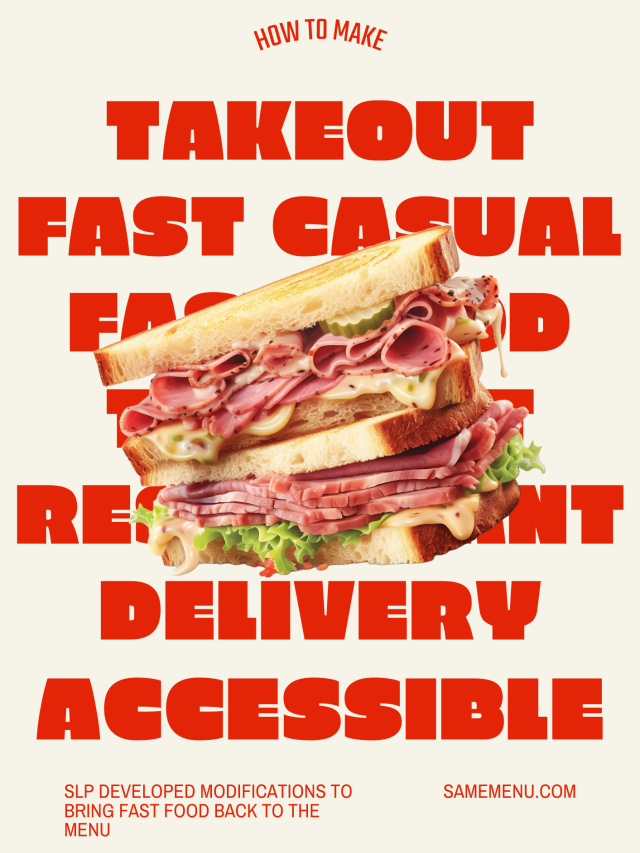
How do I keep favorite sandwiches on the menu?
Home cooks and caregivers have often been a bit surprised to learn that the solution the stickiness or those crumbly bites is shared. Moist, cohesive fillings that hold together but yield to only light pressure, on a piece of bread that has been fully saturated, also known as pregelling bread.
Other “Soft” Foods That Can Still Be Risky
Bread is not alone. Many foods earn the soft label but still cause problems.
- Rice that scatters and separates
- Nut butters that turn pasty and stick
- Scrambled eggs that crumble instead of holding together
- Dry baked fish that flakes into pieces
- Cooked vegetables with skins and fibers that slip and stay in too big of pieces
These foods are not bad. They just need adjustment.
The issue is not softness. It is how the food behaves in the breaking down and the transport phases of eating a bite when there is fatigue, (lack of) sensitivity, etc.
Quick Caregiver Edits that Make an Impact Next Meal
Skipped meals. Foods left untouched. Long pauses between bites.
Out of concern, the instinct is often to encourage, reassure, or insist. By adapting the food itself so keeps it’s identity, you’re the mind work with the body instead of against it.
- Turning familiar meals into new variations by borrowing flavors of ingredients that have become challenging in original form means that different versions of the same dish becomes redundant. This level of shared meals is difficult to replace.
- Uniting the texture and the flavors with a well planned sauce is a secret weapon in modifying meals. Fats help hold other liquids from too much runniness while you’re trying to chew.
- Respecting food fears without amplifying them helps meals stay a restorative part of the day. Safety and dignity can coexist. No one should feel embarrassed about how they eat, but full aversions without evidence can start impacting nutrition and other pieces of quality of life.
What Actually Makes a Food Easier to Swallow
Across both clinical research and real kitchens, a few principles consistently matter more than texture labels.
- Cohesion: Foods that hold together are easier to control. A bite that moves as one piece is safer than one that breaks into many.
- Moisture: Moist foods glide. Dry foods drag. Adding sauces is often more effective than changing the main ingredient.
- Predictability: Foods that behave the same way every time reduce hesitation and fear. Consistency in builds confidence.
- Pace: Rushed bites increase risk. Slower but deliberate eating allows the body to stay coordinated and calm.
These principles matter whether someone has a diagnosed swallowing disorder or just a growing sense that certain foods feel “off.”
The Overlooked Middle Ground: Fear, Tension, and Pseudo-Dysphagia
Not everyone struggling with swallowing has a formal diagnosis. And not every swallowing issue is purely mechanical.
After one scare, the body remembers. Muscles tense. Breathing changes. The swallow becomes less automatic. This can spiral into what many people experience as pseudo-dysphagia, where fear and physical sensation feed into each other.
This does not mean the problem is “in your head.” It means the nervous system is doing its job a little too well.
Gentle strategies can be trialed both while awaiting assessment and beyond:
- Eating without distractions: it can be an instinct to try to pull the attention somewhere else when experiencing anxiety; see if you notice any similar tension patterns in avoiding that concentration. There are incremental steps of time or level of challenge desired
- Taking one intentional breath before a bite: you may not notice, but you hold your breath during your swallow. If getting a swallow started is your challenge, giving your self a breath before placing the bite in your mouth can help give your brain and body what it needs as well as an anchor for attention to how your mouth and throat naturally guide your through that step.
- Choosing foods that build confidence instead of testing limits: Making changes to the textures of your foods can be an adjustment that seems stark, but it doesn’t actually take away anything of that victory of good nutrition while experiencing these new symptoms. Medical teams offer insight into the function of the building blocks and where the Goldilocks zone of not too simple, not too challenging, but once you have an idea of the diet texture that supports you, there will be ways to incorporate the elements that entice from your favorite foods.
Mindfulness is not about forcing calm or avoiding stress. It can be a tether to the space between the decisions we make with planning the meal and the natural ability your body has to keep your body functioning.
This mind body layer is real, common, and rarely addressed in medical handouts. It deserves space in the conversation.
The Bigger Picture
Swallowing changes exist on a spectrum. Most people do not wake up one day needing a fully modified diet. They drift there slowly, often without a language for what is happening.
That is where this work lives.
Between the clinical and the everyday. Between fear and function. Between restriction and adaptation.
If you are looking for practical ways to make everyday meals safer without making them feel restrictive, you are not alone. And you do not need to figure it out all at once.
Start with what works. Build from there.
Where to Go Next
If this article resonated, you may want to check out:
- My “How to Make Anything Swallowing Difficulty Friendly” cheat sheet
- Mindful eating strategies for swallowing confidence
- A texture level finder that gives insight to the clinical process of assessing eating function and which level might be the best fit until you can see your care team