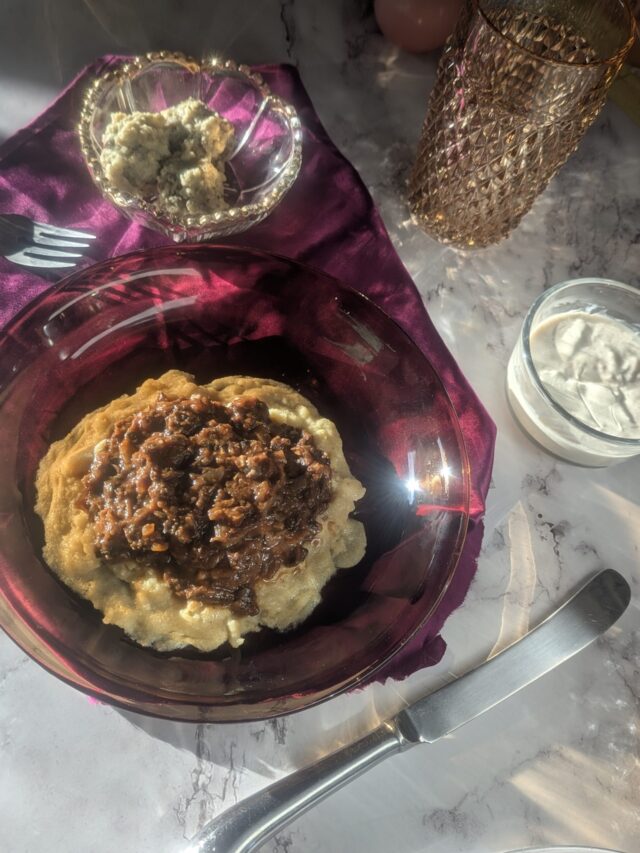
Getting enough protein on a dysphagia diet can be just as challenging as maintaining calories. Meals need to be softer, which can reduce overall protein content without even realizing it.
I wrote this guide to focus on building high protein, texture-modified meals using a simple layering system. You’ll learn how to add protein to foods already in your routine instead of complicated recipes on top of making foods fit your household’s IDDSI level(s).
How this System Works
This system follows a simple structure:
- A familiar base
- One or more protein boosters
- A final texture adjustment to match your IDDSI level
You’re layering something familiar with targeted protein additions, then doing a final texture check. The goal is to increase protein without making meals harder to eat or completely changing what you’re used to.
Base Foundation
These are familiar foods that already align closely to IDDSI-friendly textures and serve as the starting point. These base foods are the same ones used in the high-calorie guide. The difference here is how you build on them to increase protein instead of focusing on calories.
Starches / grains
Mashed potatoes
Oatmeal / cream of wheat
Soft pasta
Rice/ quinoa
Polenta / grits
Protein bases (already contributing protein)
Scrambled eggs
Greek yogurt
Cottage cheese
Soft tofu
Finely shredded or ground meats
Canned fish (boneless)
Produce bases
Blended soups
Applesauce
Hummus
Soft cooked vegetables
Blended beans/lentils/edamame
Protein Boosters
High-impact protein additions that raise protein without significantly changing texture.
Greek yogurt (plain, full-fat)
Cottage cheese (blend smooth as needed)
Protein powder (unflavored or flexible flavors)
Powdered milk
Eggs (mixed into hot foods)
Silken tofu (blends easily into sauces and soups)
Tahini (stronger flavor, more situational)
Texture Adjustments
After adding protein, the final step is ensuring the texture is still safe. Protein additions can thicken foods, create graininess, and reduce moisture, so adjustment is critical. Always recheck texture before serving.
To thin / moisten
Broth (if you use bone broth you boost it even higher)
Milk (dairy, soy)
Cream
Sauces
To smooth / unify
Blending
Straining
Mixing with sauces
To bind (if needed)
Purees
Instant potato flakes, commercial thickeners
Beans
Putting It Together
Using this system, meals stay familiar while providing more protein to support recovery and strength. You can use your established cooking skills as a foundation; this doesn’t have to get complicated. This knowledge works across meals, so you’re not dependent on individual recipes.
Examples:
- A breakfast of oatmeal or cream of wheat with protein powder and peanut butter to fortify and then adjust thickness with milk
- Blending silken tofu into soups or smoothies and then adding additional liquid as needed to thin
- Adding Greek yogurt to prepared mashed potatoes or some of your favorite casseroles helps add a creamy flavor like butter or sour cream, with a higher total protein
How to Check the Final Texture (Quick IDDSI Review)
If you are still new to your IDDSI level recommendations, I have an IDDSI Resource page with a few more in depth articles. Otherwise, here’s a quick check that doesn’t need special tools, just common kitchen utensils or even your fingers:
- Smooth, no lumps
- Flows slowly through fork tines in dollops, cannot pick up with chopsticks or fingers either
- Pours from a tilted spoon without sticking
- Confirm with flow test (no less than 8mL left after 10 seconds in 10mL syringe)
- Smooth, no lumps
- Sits on top of fork tines without flowing
- Slides off spoon with only small wrist flick with no coating leftover
- Pressing the tines into the surface leaves an imprint after removing.
- Small, soft pieces, each 4mm or smaller
- Moist enough to hold together in mounds
- Bites and pieces must be mashed easily with a fork (no nail blanching)
Level 6 Soft & Bite-Sized (SB6)
- Tender pieces that are 15mm or smaller
- A fork/spoon on its side is enough to cut or flake the pieces (or chopstick punctures)
- Pressing down to nail blanch is enough pressure to change the shape of the piece after releasing
- Tender pieces, there is no size limit
- A fork/spoon on its side is enough to cut the pieces
- Pressing down to nail blanch is enough pressure to change the shape of the piece after release
Going Forward
This approach allows you to build menus that use your favorite meals to support both swallowing needs and nutrition goals. Over time, this becomes intuitive: the same protein-rich ingredients can be reused in different combinations. This makes it easier to maintain consistency and variety so you can focus on getting the texture to fit what you currently need. For more detail on texture testing or preparation techniques, head to my resource page and my master guide for making any meal easier to eat.