Category: Education
-

What is the Frazier Free Water Protocol (And Who is it for?)
Many people with dysphagia are told to drink thickened liquids to help reduce aspiration risk. The Frazier Free Water Protocol offers a different approach by allowing carefully managed access to thin water under specific conditions. For many, it can improve hydration and quality of life. What Is the Frazier Free Water Protocol? The Frazier Free…
-
Thickened Liquids: Safety, Hydration and the Real Trade-offs
When someone is having difficulties with swallowing drinks safely, thickened liquids are one of the most common recommendations. And it makes sense when you understand the level of timing coordination that your body needs to close off the airway. If you spill a cup of water, the liquid spreads very quickly across the surface. If…
-
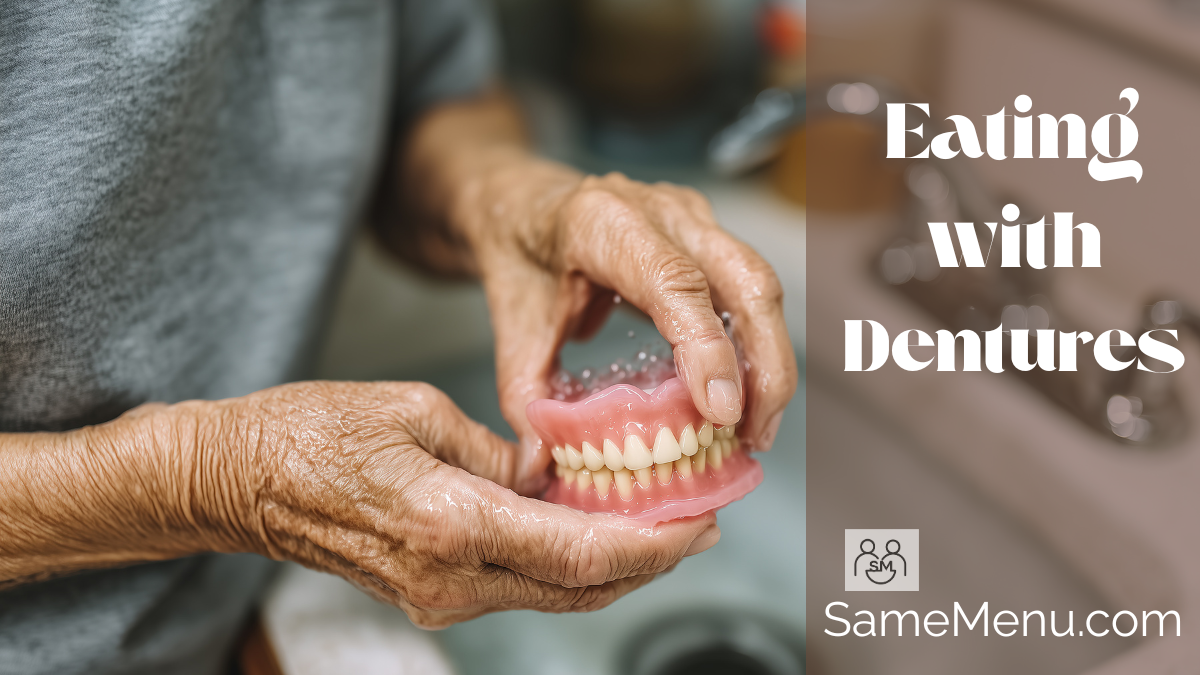
Eating with Dentures: Why Food Feels Harder and What Helps
Eating with dentures can feel very different than expected. Foods that once felt easy may now seem harder to manage, take more effort, or feel unpredictable in the mouth. This can be frustrating, especially if the dentures are adding to the amount of teeth you have to bite and chew; shouldn’t that make it easier??…
-
Dysphagia & IDDSI Glossary (Swallowing and Texture Terms Explained)
Changes to chewing and swallowing already feel like you entered another world, we don’t need to complicate things with a whole new language. This glossary decodes terms you might hear from clinicians, hospitals, or care teams on your journey with dysphagia and will continue to expand with resources and new definitions. On this page: Swallowing…
-

Why do I cough even with a dysphagia diet?
If you’re following a dysphagia diet and still coughing during meals, it can feel confusing or even alarming. Many people assume coughing means the diet isn’t working or that something dangerous is happening. In reality, coughing needs some context. Coughing is a protective reflex Coughing exists to protect your airway. When food, liquid, or saliva…
-
How Texture Changes When Food Cools (And Why It Matters More Than You Think)
Most people think food texture is fixed. You cook something, it’s soft or it’s crunchy, and that’s that. But texture isn’t static. It’s alive. It changes with temperature, time, moisture loss, and even how a food was cooked in the first place. If you’ve ever reheated leftovers and thought this isn’t the same food, you’ve…
-
Why Some ‘Soft Foods’ Still Cause Choking (and What Actually Works)
If you have ever witnessed a bite of food that was supposed to be “safe” feel less than, you may already know the quiet truth that’s not outwardly intuitive. Soft does not always mean easy to swallow. For many people, the first moment does not need some extravagant bite, it can be with one of…
-
When Eating Feels Hard: Foods That Take Less Effort
There are times when eating just feels harder than it used to. Chewing takes more work. Meals feel tiring. Foods that once felt easy now feel dry, stubborn, or uncomfortable. For many people, this shift happens gradually, and if that sounds familiar, you’re not alone. And you don’t need a diagnosis or a special “diet”…
-
What are Transitional Foods?
Dissolvable & Transitional Solids: A Practical Guide for Home Cooks Transitional solids, sometimes called dissolvable solids, meltables, or “meltable solids”, are foods that break down quickly with moisture, temperature, or light pressure. They sit in the space between minces and regular foods, offering a middle path for people rebuilding confidence, oral control, or safe chewing…
-
Understanding Your Swallow Study: How to Read Dysphagia Reports
If you’ve recently had a swallow study or are waiting for one, you may have a report full of unfamiliar words: residue, penetration, peristalsis, dysmotility. It can feel overwhelming, especially if you’re already anxious about eating. By the end of this page, you’ll know how to read the results, what they mean for your daily…