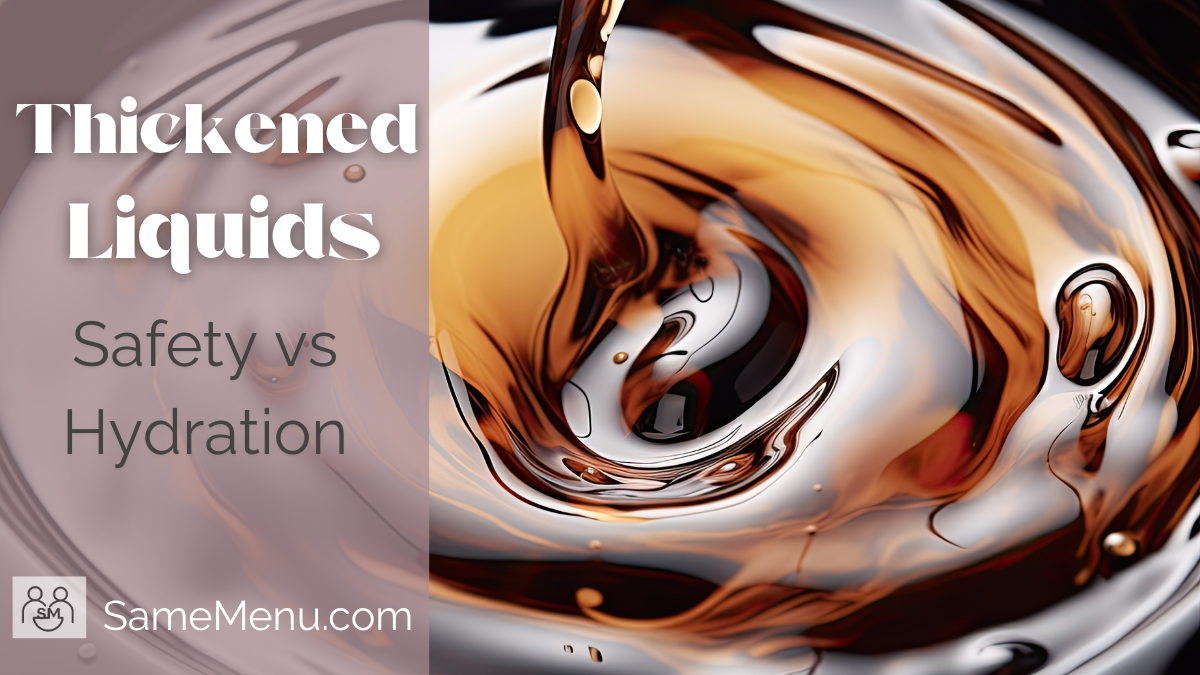
When someone is having difficulties with swallowing drinks safely, thickened liquids are one of the most common recommendations. And it makes sense when you understand the level of timing coordination that your body needs to close off the airway. If you spill a cup of water, the liquid spreads very quickly across the surface. If you spill a naturally thicker liquid like honey, you will have plenty of time to catch the spill before it gets too far. But the change to thickened liquids is not without compromise. They affect hydration, comfort, nutrition and quality of life. Let’s talk about the pros and cons so that you and your family can make informed decisions.
What are Thickened Liquids?
Thickened liquids are beverages altered to a thicker consistency to slow the flow of liquid during swallowing. Slower flow can improve coordination between the swallow and airway protection in some people with dysphagia. Liquids may be thickened to different levels, described using IDDSI categories of:
- Thin
- Mildly Thick
- Moderately Thick
- Extremely Thick/Liquidized
Thickening can be done using powders or gels and some beverages come prethickened. These are made from starches or xanthan gum and require good stirring to make sure they’re well combined.
Why are Thickened Liquids Prescribed?
One of the most common reasons this strategy is used is following successful trials with the liquids after a modified barium swallow study. The person may present with a delayed start to the swallow, weak or paralyzed throat muscles that are used to lift the airway up and forward, out of the path of the liquid. For those individuals, thickening liquids can reduce the risk of liquids reaching the lungs instead of stomach. That’s a huge win in safe swallowing, so what is the trade?
The Trade-offs of Thickened Liquids
These liquids are a clinical tool, but it doesn’t come as a recommendation to every single person with dysphagia. There are several reasons why this decision should be made with clear communication and respect for the concerns of those involved.
Dehydration Risk
Many people will drink less when their liquids are thickened. The modification changes the mouth feel, the way the temperature is perceived, and the amount of thirst satisfaction the person reports. Due to this, overall intake often suffers. If continued for longer terms, dehydration becomes more common.
Taste changes
Thickening products can also change how a person experiences the aroma and flavor of a drink. There will be reports of favorite coffees, juices, or even water no longer being as good as they once had been. This definitely reduces desire to drink, even when someone knows it is important.
Medication Challenges
Taking medications is sometimes the start of someone feeling changes to their swallowing; pills can be challenging. Some medications can have mild interactions with the ingredients in the thickening product, which might change the texture over time or affect the absorption in the body. If medications are crushed, this will thicken the liquid (and thicker does not equal safer by default).
Lack of Transparency
When thickened liquids are perceived as unpleasant to the person drinking them, they may start to take matters into their own hands, often without honest communication. It is not uncommon to find someone is sneaking thin liquids. If a person with these changes also has safety recommendations that require reminders, this unsupervised drinking can lead to worst outcomes.
Are Thickened Liquids “Bad”?
No, they are not good or bad; they’re a safety strategy. For some people, they significantly improve how well they can control the liquid. For others, the trade-offs may outweigh the benefits. The right decision is a lot more personalized than I can know about your unique situation. As an speech-language pathologist, when supporting a client, we may discuss:
- Individual swallow physiology
- How stable they are medically
- Any history of lung disease
- Cognitive status for using other strategies
- Personal beliefs and priorities when it comes to their health
There is no universal answer; an individual assessment and consultation with an SLP is the only way to receive a personalized plan for addressing difficulties swallowing liquids.
Signs Thickened Liquid May Need Re-Evaluation
As a clinician that has worked across all settings, from hospital to home health, what becomes clear is that sometimes caregivers are working off of older information. Thickening liquids may have been a good fit previously, but since discharge from working with an SLP, caregivers may notice signs that can point to the need for updated recommendations. Things like:
- Significant drop in fluid intake
- Chronic dry mouth or constipation
- Marked weight loss
- Reoccurring dehydration
do not automatically mean that the thickened liquids were wrong, but warrant getting some eyes on the current situation. It is extremely common for swallowing needs to change over time and we can shift the strategies to meet you where you are in this moment.
Beyond Thickening: Additional Approaches
It is impossible to eliminate all of the risk for liquids going down the wrong pipe, but thickening is not the only option. In some cases, clinicians may consider posture changes, pacing strategies, or hybrid approaches like the Frazier Free Water Protocol, depending on the individual’s situation. Swallowing safety matters. So does hydration, nutrition, and quality of life.
Any changes should always be guided by a qualified speech-language pathologist. This article is for educational purposes only and not replace an individualized assessment.
More Reading
If you’ve received a new dysphagia diagnosis, you can start here for a basic review, check out the glossary to help understand recommendations. This site focuses on dysphagia food recipes, but does include a liquidized diet texture that is the same as IDDSI level 3 Moderately Thick Liquids, and pureed recipes that fit IDDSI level 4 Extremely Thick Liquids.
Leave a Reply