Minced & Moist (IDDSI Level 5)

Soft foods that are finely chopped and held together with moisture so they don’t crumble or fall apart.
Pizza is one of those foods that can be surprisingly complicated when a child needs a modified texture. There are several textures happening in a single bite, including chewy crust, melted cheese, meat and sauce. As pizza cools, the crust can get tougher and the cheese can become even more stretchy and chewy.
This kid friendly dysphagia pizza keeps the familiar flavors of pizza while giving us much more control over each part of the meal. It is designed for IDDSI Level 5 Minced & Moist, using finely prepared meat, smooth thickened tomato sauce and a soft couscous and cheese base.
Using Couscous for the “Crust”
For this recipe, I use regular fine couscous to create the base of the pizza bowl. Couscous is actually a very small grain, which makes it a useful ingredient when preparing foods for Level 5.
Pediatric Level 5 foods have a much smaller particle size requirement than the adult version of the diet. Pieces should be 2 mm or smaller for children. Fine couscous gives us pieces that are already very small, so we can cook them until completely soft without having to process cooked pasta into a paste. Mixing the couscous with cheese sauce also helps keep the individual grains moist and cohesive. The finished mixture can be spread into a round “crust” for presentation or simply spooned into a bowl.
Why This Cheese Sauce Is Different
Stretchy cheese is one of the biggest problems with trying to modify pizza for dysphagia. Mozzarella gives traditional pizza its familiar cheese pull, but those long strands are exactly what we want to avoid here. The cheese sauce in this recipe uses cream cheese along with smooth melting, processed cheese. Cream cheese adds body and creaminess, while the processed cheese adds the familiar color and cheesy flavor kids may expect. Processed cheese also contains emulsifying ingredients that help it melt smoothly.
The sauce is thickened with flour so it coats and binds the couscous. This is especially important for Level 5, where we want a moist, cohesive texture without thin liquid separating from the food. (The cheesy crust is also my version of kid friendly mac & cheese for the same reasons I listed above, so you could do a double batch and use half as a side and half in this recipe to cut down on dishes/cooking time.)
Keeping the Pizza Topping Moist
For toppings, ground beef or turkey is cooked with broth instead of being heavily browned. Browning tastes great on a traditional pizza, but it can also create dry or firmer pieces of meat. Once cooked, the meat needs to be prepared so the particles are 2 mm or smaller, then combined with plenty of smooth tomato sauce. The sauce provides moisture and classic flavor and helps the small pieces of meat stay together on the fork. I keep the seasoning simple with oregano, basil, garlic and a little Parmesan. You still get a recognizable pizza flavor without needing pepperoni, sausage pieces or other toppings that can introduce tougher textures (Just be sure to fully grind the seasonings to avoid fibrous pieces).
Test the Whole Meal
One of the most important habits when cooking for dysphagia is testing the food as it will actually be served. It is especially important with this recipe because cheese sauce can thicken as it cools. Check the finished pizza at serving temperature. If the couscous base becomes too thick or sticky while sitting, adjust it with a small amount of warm milk or broth and test it again. The meat mixture should remain moist and cohesive without any thin tomato liquid separating out. For pediatric IDDSI Level 5, check that all food particles are 2 mm or smaller and that the finished food passes the appropriate fork drip and spoon tilt tests.
Make this Recipe for Your IDDSI Level
As written, this recipes is at IDDSI Level 5 Minced and Moist. This recipe can also be adapted for Level 3 Liquidized, Level 4 Pureed, Level 6 Soft and Bite Sized, and Level 7 Easy to Chew. See the adaptation instructions below or if you are printing the recipe, they will be included in the notes section.
Level 3 Liquidized (Smooth enough to drink or pour; no chewing): Blend the crust and toppings with broth gradually and use the flow testing to make sure ~8ml are left at the end of 10 seconds in approved funnel.
Level 4 Pureed (Smooth and thick enough to hold shape on a spoon; no chewing): Blend finished cheese crust until smooth; thin with splashes of warm broth as needed if too thick. Separately blend the toppings with splashes of broth and plate similarly to the MM5 version.
Level 6 Soft and Bite Sized (Tender pieces smaller than half the width of fork prongs) and Level 7 Easy to Chew (Foods that are soft and easily bite into pieces): You can follow the recipe as written. You can leave the ground pieces at 8mm for SB6 and above.
Dysphagia Pizza Pediatric Recipe
Ingredients
Equipment
Method
- Gently cook the meat with broth until completely cooked and very tender. Avoid browning or crisping by breaking up while cooking and adding more splashes of broth if evaporating.
- Add tomato sauce, oregano, basil and garlic powder. Simmer for 5 minutes. Process the meat mixture until all particles are 2 mm or smaller.
- Return to the skillet and stir in Parmesan. Adjust with tomato sauce if necessary so the meat is moist, cohesive and surrounded by thick sauce without separated liquid.
- Bring 1 1/2 cup of water to a boil, then stir in a 7oz box of dry couscous. Remove from heat and cover. Make the cheese sauce by melting butter and whisking in flour. Cook briefly, gradually whisk in milk and cook until thickened. Remove from heat and stir in cheese until completely smooth.
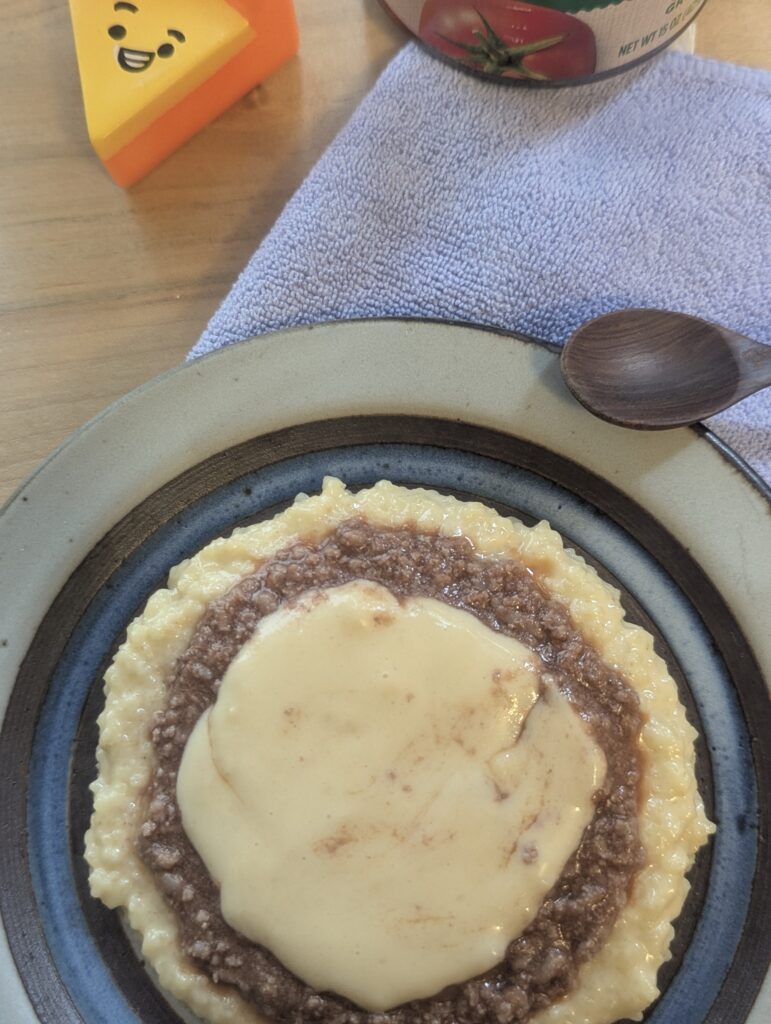
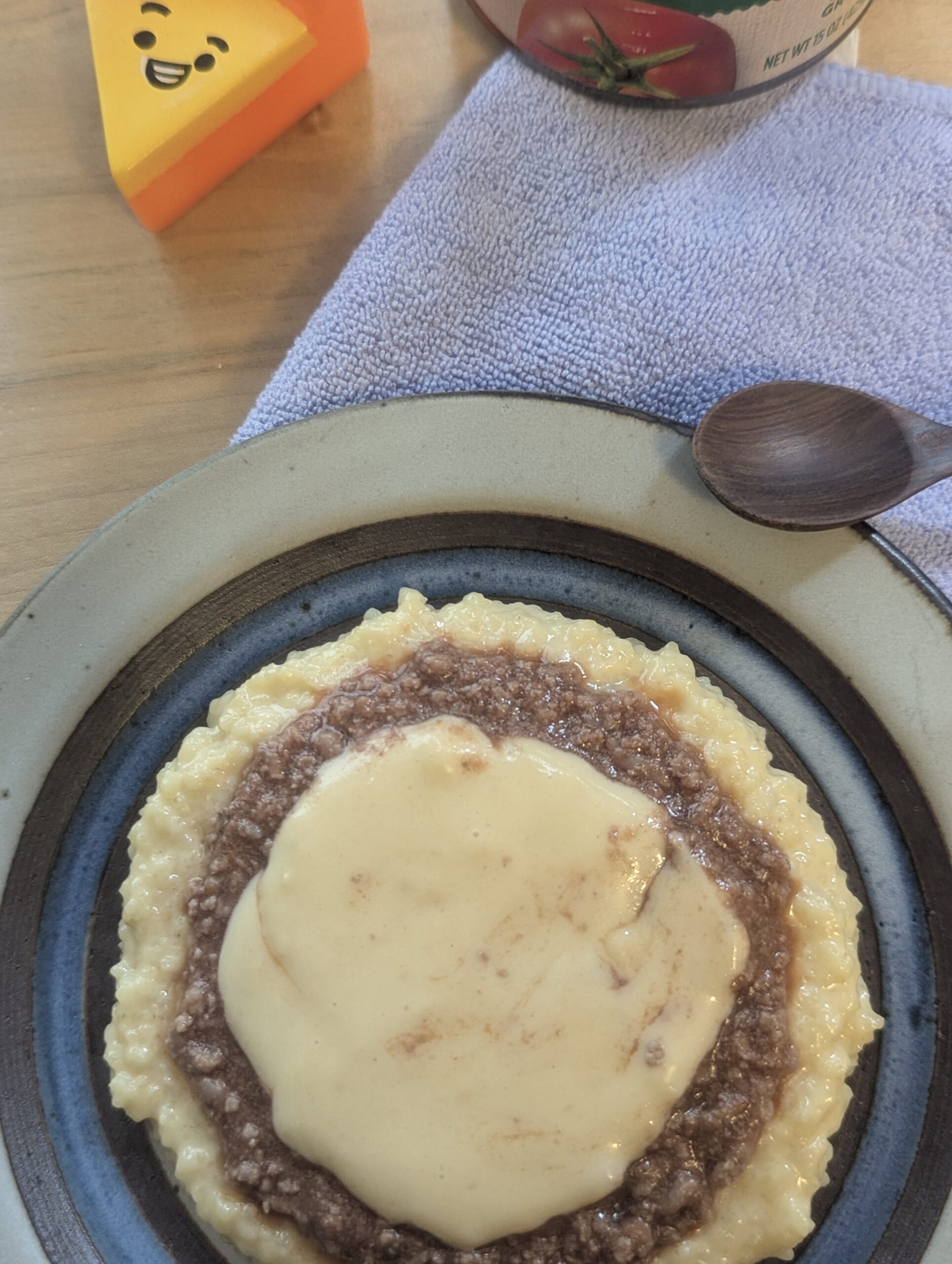
- Reserve half of the cheese sauce for topping the pizza. Stir in 150 grams of cooked couscous into the cheese sauce until well combined and cohesive. Plate by spreading the cheese crust in a circle on the plate and then top with the pizza mixture. Finally, add a circle of the remaining cheese sauce on top.
- Perform the pediatric Level 5 Fork and Spoon Tilt tests at serving temperature.
SLP Notes
IDDSI Texture Modifications: Level 3 Liquidized (LQ3): Blend the crust and toppings with broth gradually and use the flow testing to make sure ~8ml are left at the end of 10 seconds in approved funnel. Puree 4 (PU4): Blend finished cheese crust until smooth; thin with splashes of warm broth as needed if too thick. Separately blend the toppings with splashes of broth and plate similarly to the MM5 version. Soft & Bite-sized 6 (SB6) and Easy to Chew 7 (EC7): You can follow the recipe as written. You can leave the ground pieces at 8mm for SB6 and above. Don’t know your IDDSI Level? Texture Finder here. Testing Method: Food should pass the fork pressure test (mashes easily with light pressure) and the spoon tilt test (holds together but slides off easily when tilted). Particle Size: Pieces must be ≤ 2 mm for children (4 mm for adults). All food should appear cohesive, not crumbly or sticky. Moisture Level: Add small amounts of sauce, broth, or dressing until the mix clings together without pooling liquid. Serving Tip: Keep the dish visually appealing by shaping or layering components while maintaining moisture. Retest texture if reheated or refrigerated.Making Pizza Feel Like Pizza
Presentation can go a long way with modified texture foods. You can spread the cheesy couscous into a small circle and spoon the tomato and meat mixture over the top to give it more of a pizza appearance. A little smooth cheese sauce can be added on top as well. It still needs to be eaten with a fork or spoon, but visually separating the “crust,” sauce and toppings can help make the meal recognizable before the first bite. For kids who are used to seeing pizza on everyone else’s plate, that familiarity can matter.