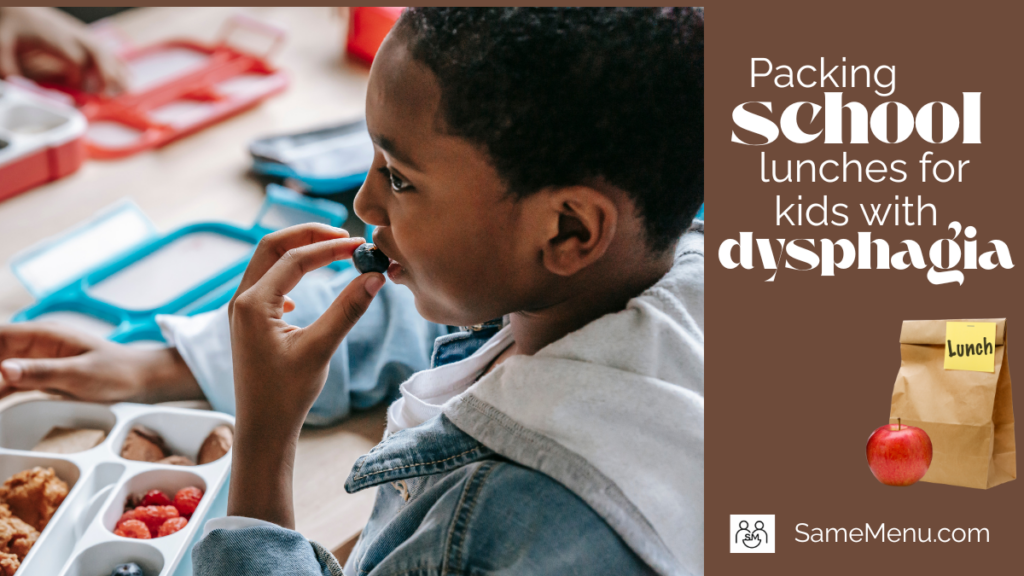
Packing lunch for a child with dysphagia involves a little more planning than putting an appropriate food into a lunchbox. A meal might leave your kitchen at the correct IDDSI level at 7:30 in the morning and not be eaten until noon. During those hours it may be refrigerated, transported, reheated, stirred, opened, transferred to another container or served by someone who didn’t prepare it. And food changes. So when you’re sending texture modified food to school or daycare, the question becomes “Will it still meet that recommendation when my child actually eats it?” That’s what we’re going to make a plan for.
Start With Your Child’s Feeding Plan
Before worrying about lunch containers, make sure everyone involved understands the actual feeding recommendations. Depending on your child, those might include:
an IDDSI food level
an IDDSI drink level
specific foods to avoid
positioning requirements
recommended utensils or cups
bite or sip size
pacing
level of supervision
feeding assistance
strategies recommended by the feeding team
Don’t assume that saying your child has “dysphagia” tells school or daycare staff what they need to do. Likewise, “soft food” isn’t a particularly clear instruction. If your child’s feeding team has prescribed an IDDSI level, using that standardized terminology gives everyone a much clearer starting point.
Pack for the Meal Your Child Will Eat, Not the Meal You Made
Say you make pasta in a thick, creamy sauce. At home, it’s moist and cohesive. Then you refrigerate it overnight. The pasta absorbs some of the sauce, so the next morning it’s thicker. At school it’s reheated in a microwave, which causes additional moisture loss. By lunchtime, you’ve potentially created a very different food. That’s why I recommend testing packed meals under conditions that resemble how they’re actually going to be served.
If a meal will be
cooked -> refrigerated overnight -> transported cold -> reheated -> eaten warm
then that’s the version you should be interested in testing. Not just the freshly cooked version.
Do a Practice Lunch at Home
Before sending a new modified recipe to school, consider doing a trial run. Prepare and package it exactly as you plan to for school. Let it sit for approximately the same amount of time, stored at the same temperature. Reheat it using the same method, then open the container and look at what actually happened and perform the appropriate IDDSI tests. You may discover that the recipe works beautifully. Or you may discover that it needs additional sauce, a different container or a completely different packing strategy. It’s much easier to figure that out in your kitchen than during your child’s lunch period.
Should I Premix Everything?
Sometimes; this depends heavily on the meal. For some Level 5 Minced & Moist foods, for example, an appropriate sauce may be an important part of keeping the food moist and cohesive. Sending dry minced meat in one container and sauce in another means someone at school now has to combine them correctly and that’s additional room for error.
If the completed mixture holds its appropriate texture during storage and reheating, sending it already combined may be the simpler and more reproducible option.
But not every food holds well after being mixed. Some starches continue absorbing liquid while they sit. A perfectly moist mixture in the morning can become considerably thicker or drier several hours later. In those situations, sending components separately may work better, but only if the person serving the meal has clear instructions for combining them. Think about which method gives you the most predictable finished food with the fewest opportunities for something to go wrong.
Be Careful With “Add Water If Needed”
I generally don’t love vague instructions like this for dysphagia meals. The person serving your child’s lunch shouldn’t have to become the recipe developer. How much water? What does “needed” look like? Adding too much can create separate thin liquid, which creates a tricky texture called a mixed consistency. If your child’s feeding team approves a specific adjustment at school, make the amount and procedure clear.
Choose Containers Based on the Food
Packaging isn’t just about preventing leaks, the container can affect the finished meal. A very wide container creates more exposed surface area and can encourage moisture loss. A poorly sealed container can allow food to dry. For modified foods, I generally prefer containers that:
seal securely
minimize unnecessary moisture loss
are easy for staff to open
can be reheated appropriately if required
keep foods separate when they actually need to remain separate
If a particular cup, spoon, straw or other utensil is part of your child’s feeding plan, make sure that gets to school too.
Temperature Is Part of Texture
We usually think about food temperature in terms of preference and food safety. For dysphagia, it can also affect texture. Think about cheese sauce. Hot cheese can be fluid, but as it cools, fat and proteins behave differently and the sauce can become considerably thicker, firmer or stringier. Starches can also thicken as they cool. Fats tend to solidify. So if your child is going to eat the meal warm, test it warm. If they’re going to eat it cold, test it cold. And if your child is a slow eater, consider what the meal will be like 15 or 20 minutes after it’s served. A food that passes an IDDSI test for the first bite but becomes inappropriate halfway through lunch isn’t a particularly useful recipe for that child.
Reheating Can Change Things Again
Microwaves are convenient, but reheating isn’t always uniform. The outside of a meal may be extremely hot while the center remains cold. Reheating can also cause moisture loss and therefore the consistency of sauces. If school staff will microwave the meal, you may need instructions such as:
Heat for the specified amount of time.
Stir thoroughly.
Allow to cool to the appropriate serving temperature.
Serve only after the food has reached the expected consistency.
The exact procedure should be based on the particular meal and your child’s feeding plan.
Think About Drinks Too
If your child requires thickened liquids, school planning becomes especially important. The drink needs to be the prescribed thickness when your child drinks it. Some thickening agents change over time. Temperature can affect viscosity. Different beverages may behave differently with the same thickener. Breast milk, formula, water, juice and milk aren’t automatically interchangeable when it comes to thickening. If you prepare thickened drinks at home, follow your child’s established recipe and storage instructions so they’re ready to go when your child is sitting down for a meal. If staff prepare them at school, they need enough information and training to reproduce the prescribed consistency.
Label More Than Just the Child’s Name
For a child with dysphagia, a useful label might include information such as:
CHILD’S NAME
IDDSI LEVEL 5 – MINCED & MOIST
Refrigerate
Heat -> stir thoroughly -> allow to cool before serving
If components need to be combined:
ADD ENTIRE CONTAINER B TO CONTAINER A BEFORE SERVING
The child’s formal feeding plan should contain the complete clinical instructions. The lunch label doesn’t need to become a medical chart. Its job is to make the immediate meal instructions difficult to misunderstand.
Supervision Is Part of the Feeding Plan
A perfectly prepared meal doesn’t eliminate the need for appropriate supervision. Some children with dysphagia may need an adult to monitor or assist them during eating and drinking. Your child’s feeding team may recommend specific strategies involving:
positioning
pacing
bite or sip size
utensils
cups
feeding assistance
Those recommendations need to follow the child to school or daycare. The adult supervising lunch should know what your child’s normal eating looks like and what signs should cause concern. Depending on your child’s individual history, concerning signs during a meal might include things such as:
coughing
choking
repeated throat clearing
wet or gurgly vocal quality
changes in breathing
unusual congestion
food remaining in the mouth
difficulty chewing
fatigue
suddenly refusing to continue eating
Not every child with dysphagia shows the same signs. That’s why supervision instructions should come from the child’s individual feeding plan rather than a generic internet checklist.
What Happens If My Child Doesn’t Finish?
Maybe your child normally eats slowly, maybe lunch periods are short. If your child routinely can’t finish an appropriate amount within the available meal period, that’s information the school and your child’s healthcare team should know. The solution shouldn’t automatically be “eat faster.” Feeding safety and efficiency need to be considered together and having a plan ahead of time can allow your care team to help you brainstorm solutions that work for your kid.
What About Field Trips, Parties and Special Events?
These are exactly the situations where a good routine can fall apart. Someone brings cupcakes. A field trip provides boxed lunches. If your child requires texture modification or thickened liquids, ask the school or daycare how these situations are handled. You may decide that sending an appropriate alternative is the simplest option. A child shouldn’t have to be excluded from every pizza party simply because the standard slice of pizza isn’t appropriate for their swallowing abilities. Sometimes we can preserve the flavors and experience of the food while modifying its physical properties. That’s one of the reasons I’ve developed pediatric dysphagia recipes around familiar foods. (Like my nonstringy mac & cheese, or this birthday cake custard).
Create a Small Rotation of Proven School Meals
You don’t need 30 different lunches immediately. I’d rather have five meals that you know
your child likes
meet the prescribed texture
survive refrigeration
travel well
reheat predictably
maintain their texture while being eaten
Once you’ve established those, you can expand the rotation. When you’re considering a new packed meal, ask:
Does it meet the prescribed IDDSI level when freshly prepared?
Does it still meet that level after being stored the way school will store it?
What happens after reheating?
What happens as it sits during the meal?
If it passes all four situations, you’ve got a school lunch. Once you understand which foods travel well, which sauces remain stable and which meals need special handling, packing a dysphagia-friendly lunch can become much more routine.
Need More Information?
You can share my guide to testing for pediatric IDDSI levels with your child’s teacher/care professionals to get everyone on the same page. Still figuring out meals at home too? Check out the article What Can a Child With Dysphagia Eat? for a breakdown of how to approach a new diagnosis at dinner time.
Every recipe here is designed for texture sensitive eaters: from dysphagia to dental issues to picky eaters. Get recipe roundups and practical tips by joining the mailing list.