Pureed (IDDSI Level 4)

Completely smooth foods/extremely thick liquids with no lumps that hold their shape on a spoon and don’t require chewing.
Liquidized (IDDSI Level 3)

Smooth foods that pour easily and require no chewing, but are moderately thicker than regular liquids.
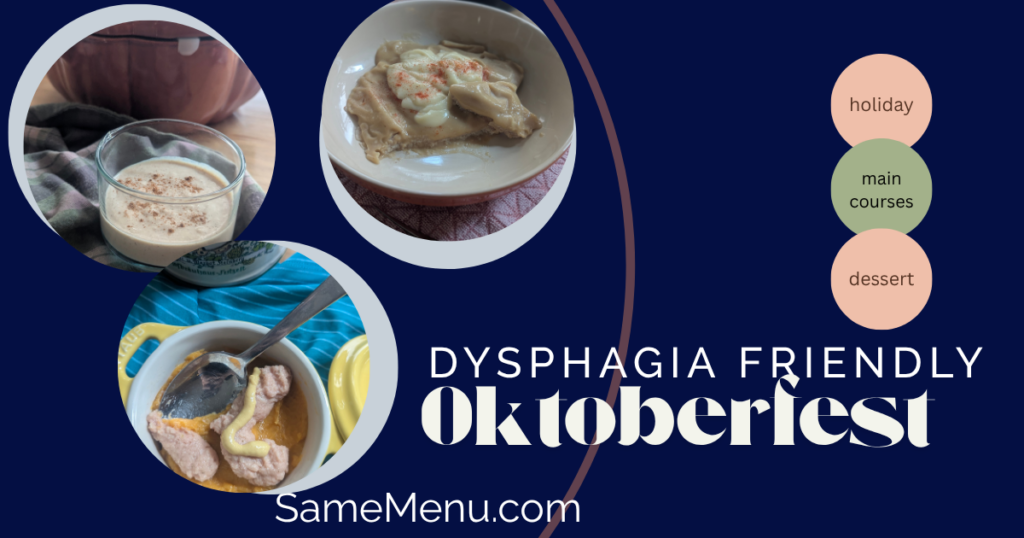
Oktoberfest foods are full of flavors that are easy to recognize: savory sausage, tangy sauerkraut, sweet mustard, pretzels, apples, and warm spices. Unfortunately, crisp schnitzel breading, sausage casings, fibrous sauerkraut, and chewy pretzels aren’t naturally suited to a texture-modified diet. That doesn’t mean those foods and flavors have to disappear from the menu. This Oktoberfest inspired collection includes three recipes designed specifically for texture modification: Pretzel Chicken Schnitzel at IDDSI Level 4 Pureed, Bavarian Bratwurst with Sauerkraut and Sweet Potato at IDDSI Level 4 Pureed, and an Apple Strudel Shake at IDDSI Level 3 Liquidized.
Rather than preparing traditional versions and putting them into a blender, each of these recipes considers the texture from their beginnings. Moist cooking methods help keep meats tender, potentially troublesome ingredients like pretzels and sauerkraut are fully softened and processed, and individual components are kept separate when possible to preserve the appearance and flavors of the original meal.
This recipe set and their diet textures was requested by one of my email list subscribers; you can get in touch to request modifications to your own favorite meals too!
Pretzel Chicken Schnitzel
Schnitzel is known for its thin cut of meat and crisp breaded coating, which makes the traditional version a difficult fit for someone who needs a pureed diet. But the flavors that make schnitzel recognizable don’t have to disappear just because the texture needs to change.
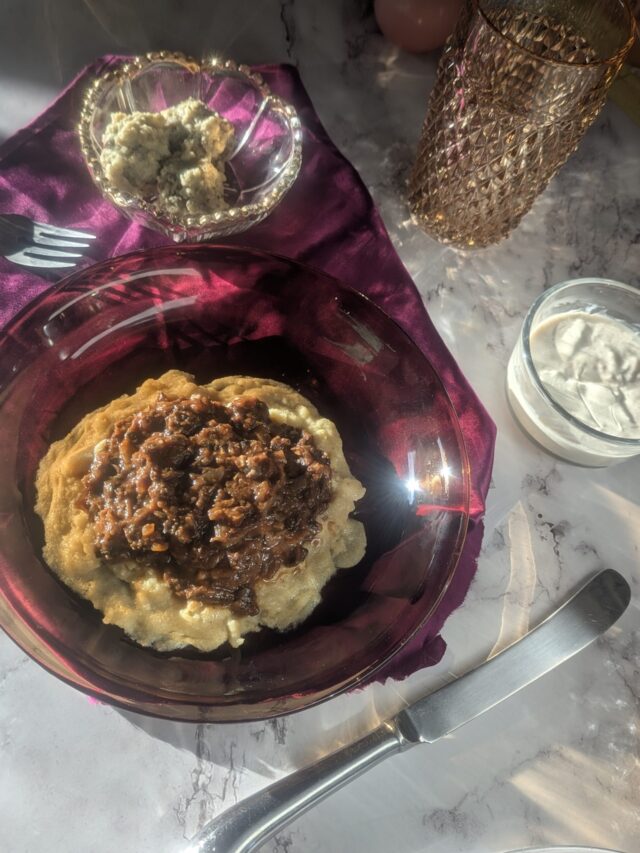
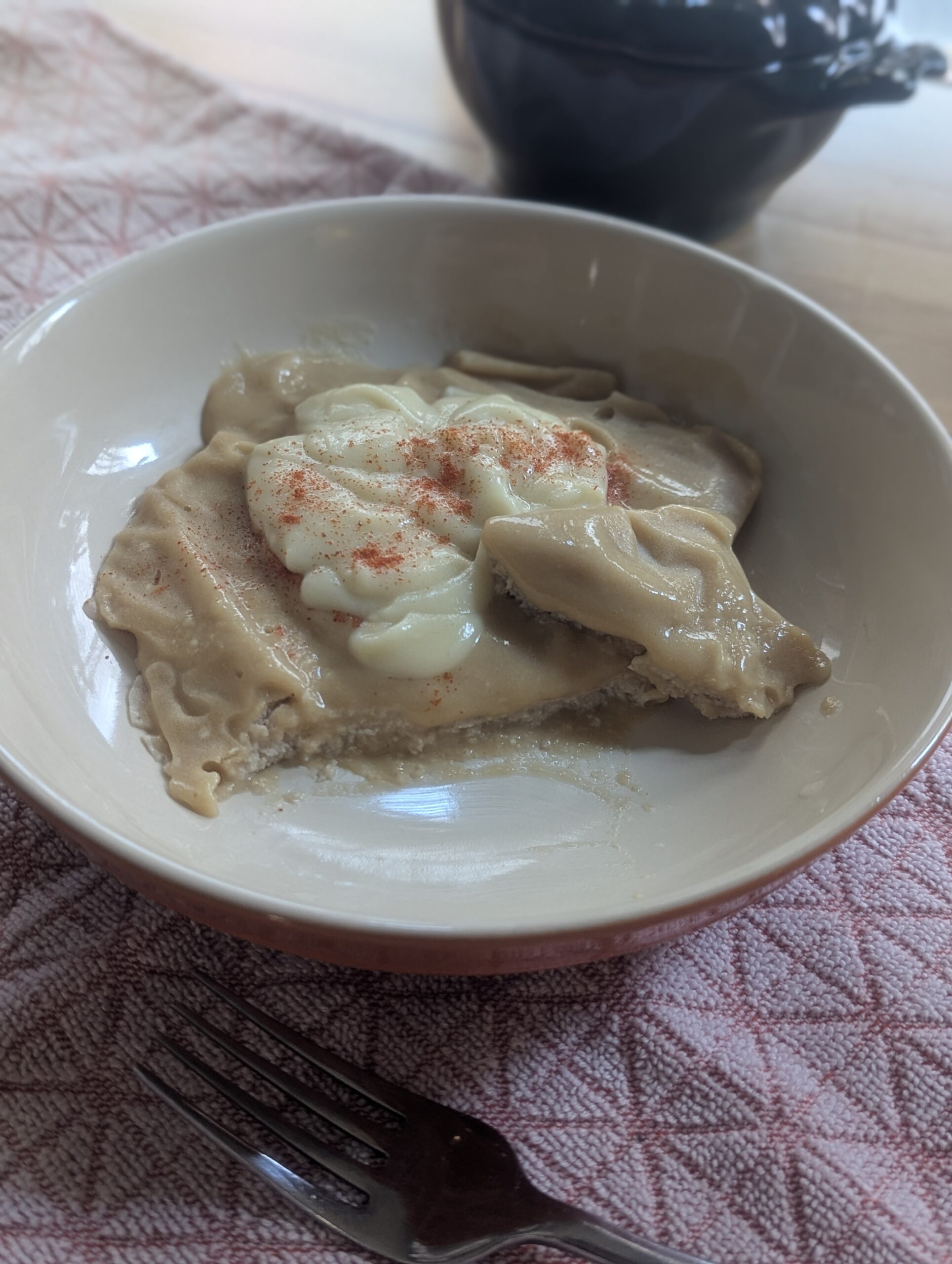
This Oktoberfest-inspired version uses tender chicken and pretzels to recreate those familiar savory flavors in an IDDSI Level 4 Pureed dish. Instead of frying the chicken and trying to puree a dry, crispy coating afterward, each part of the recipe is prepared specifically with the final texture in mind. The result is a smooth chicken schnitzel puree with a soft pretzel coating that can be shaped and plated to resemble the original meal.
Why We Skip the Frying
Traditional schnitzel is breaded and fried until crisp. That texture is exactly what we’re trying to avoid when preparing food for an IDDSI Level 4 diet. Frying also removes moisture from the chicken and creates a dry exterior. Both can make the finished food more difficult to puree smoothly and may require significantly more liquid to correct later. For this recipe, the chicken is cooked using a moist cooking method until tender. The cooking liquid can then be incorporated back into the chicken while blending. This helps us create a smooth, cohesive puree without diluting the flavor. It’s a useful principle for pureed cooking in general: start with moist, tender food whenever possible. It’s much easier to create a good puree when you aren’t trying to add back moisture that was intentionally cooked out.
Making a “Pretzel Crust” Without the Crunch
The schnitzel coating takes a slightly different approach with this recipe. Dry pretzel crumbs wouldn’t be appropriate as a garnish or breading for a Level 4 food. Instead, the pretzels are finely ground and completely softened with hot liquid to create a smooth mixture, also known as a pregel. This gives us the toasted, salty pretzel flavor we’re looking for while removing the dry, crunchy texture.
Make sure the mixture is thoroughly hydrated. There shouldn’t be any recognizable crumbs, hard particles, or dry pieces remaining. Depending on your pretzels and equipment, you may also need to blend or pass the mixture through a fine-mesh sieve.
Shaping the Schnitzel
Presentation can be especially useful with pureed foods because shape and color give the person eating visual information about what’s on the plate. For this recipe, the chicken puree can be spread or piped into a thin oval shape that resembles a piece of schnitzel. Briefly freezing the shaped puree makes it much easier to handle while adding the soft pretzel coating. The frozen portion can then be covered with a thin layer of the prepared pretzel mixture and transferred to the refrigerator to thaw completely. The finished food should be completely thawed and served at an appropriate temperature. Keeping the pretzel mixture as a separate outer layer also gives the schnitzel some visual contrast instead of blending every ingredient into one uniform puree.
Serving Your Pureed Schnitzel
Schnitzel is commonly served with potatoes, so a smooth mashed potato or sweet potato puree makes an easy Level 4 side. A little lemon flavor can also help recreate the traditional pairing without placing a lemon wedge or other unsuitable garnish on the plate. You can also include your favorite fall vegetables on the side. I opted to create a simple chicken gravy from remaining braising broth.
When plating, think about how the original meal would look. Rather than mixing the chicken, pretzel, potato, and vegetables together, keeping the components separate can make the food easier to recognize and give the person eating more choice over which flavors they combine in each bite.
Always Test Before Serving
Ingredient brands, the amount of moisture lost during cooking, equipment, storage, reheating, and serving temperature can all affect the final texture. The finished schnitzel and its pretzel coating should therefore be tested together, at the temperature at which they’ll actually be eaten. For IDDSI Level 4, the food should be completely smooth and cohesive, without lumps, hard pieces, skins, crusts, or separated liquid.
Use the IDDSI Fork Drip and Spoon Tilt Tests to confirm the finished dish meets Level 4 requirements before serving.
If it’s too thick or sticky, add an appropriate liquid in small amounts and blend again. If you can still detect pretzel particles or chicken fibers, continue processing and strain if necessary.
The goal isn’t simply to make schnitzel “soft.” It’s to recreate as much of the familiar meal as possible while producing a consistent texture that meets the person’s prescribed diet.
Make this Recipe for Your IDDSI Level
As written, this recipes is at IDDSI Level 4 Pureed. This recipe can also be adapted for Level 3 Liquidized, Level 5 Minced and Moist, Level 6 Soft and Bite Sized, and Level 7 Easy to Chew. See the adaptation instructions below or if you are printing the recipe, they will be included in the notes section.
Level 3 Liquidized (Smooth enough to drink or pour; no chewing): Blend, slowly adding broth until it moves when poured at a pace of 2 mL per 10 seconds (check out the flow test details).
Level 5 Minced and Moist (Soft pieces that fit between fork prongs in a puree; minimal chewing): Mince the chicken into <4mm pieces and toss in the pretzel puree.
Level 6 Soft and Bite Sized (Tender pieces smaller than the width of fork prongs): Dice the chicken to <15mm, topping with the pretzel puree, being sure to look out for any separate thin liquids.
Level 7 Easy to Chew (Foods that are soft and easily bite into pieces): You can keep the chicken thighs whole, being sure to monitor for connective tissue, skin and top with the pretzel puree.
Pretzel Chicken Schnitzel
Ingredients
Equipment
Method
- Heat oven to 350°F (175°C). Place the chicken in a small covered baking dish with 120 g chicken broth. Cover tightly and bake until the chicken is completely cooked and very tender, about 25-30 minutes.
- Finely grind the pretzels into a powder. Stir them into about 60 g hot broth and let stand until completely softened with no firm or dry pieces remaining (aka pregel). Complete spoon tilt testing to ensure not too sticky.
- While chicken cooks and pretzels pregel, boil potatoes or make instant potatoes.
- Cut the cooked chicken into pieces and add it to a high-powered blender with the softened pretzel mixture, potatoes, butter, lemon juice, and some of the chicken cooking liquid.
- Optional plating step: If you are making ahead, you can freeze a portion of the puree and then repeat the pretzel crumb pregel. Cover the coated portion to achieve schnitzel appearance and thaw under refrigeration fully before service, testing upon reheating.
- Blend until completely smooth, gradually adding cooking liquid as needed to achieve Level 4 consistency.
- Perform the IDDSI Fork Drip and Spoon Tilt Tests before serving.
SLP Notes
IDDSI Texture Modifications: Level 3 Liquidized (LQ3): Blend, slowly adding broth until it moves when poured at a pace of 2 mL per 10 seconds (check out the flow test details). Level 5 Minced and Moist (MM5): Mince the chicken into <4mm pieces and toss in the pretzel puree. Level 6 Soft and Bite Sized (SB6): Dice the chicken to <15mm, topping with the pretzel puree, being sure to look out for any separate thin liquids. Level 7 Easy to Chew (EC7): You can keep the chicken thighs whole, being sure to monitor for connective tissue, skin and top with the pretzel puree. Testing Method: This recipe should pass the spoon tilt and fork drip tests defined by the International Dysphagia Diet Standardization Initiative (IDDSI). The puree should sit in a mound on a spoon, sliding off in one bite when tilted/ lightly flicked, with no thin liquid separating. The puree should sit on top of a fork and should not drip through the fork tines (small “tail” is ok). Adjusting Consistency: If the mixture is too thick, add small amounts of liquid (broth, sauce, milk, or water) one teaspoon at a time. If too thin, add a thickening ingredient such as instant potato flakes, pureed vegetables, or thickener as clinically appropriate. Temperature Caution: The viscosity of purees changes with temperature. Always test after reheating or chilling, as thinner or thicker consistencies may alter the IDDSI level. Storage & Reheating: Refrigerate promptly and reheat gently, stirring between intervals. Always retest consistency before serving.Bavarian Bratwurst and Sauerkraut
Bratwurst and sauerkraut bring some of the most recognizable German flavors to this Oktoberfest menu. For this IDDSI Level 4 version, we’re pairing them with Bavarian sweet mustard and serving the sausage mixture over a smooth sweet potato puree.
Why Sweet Potato?
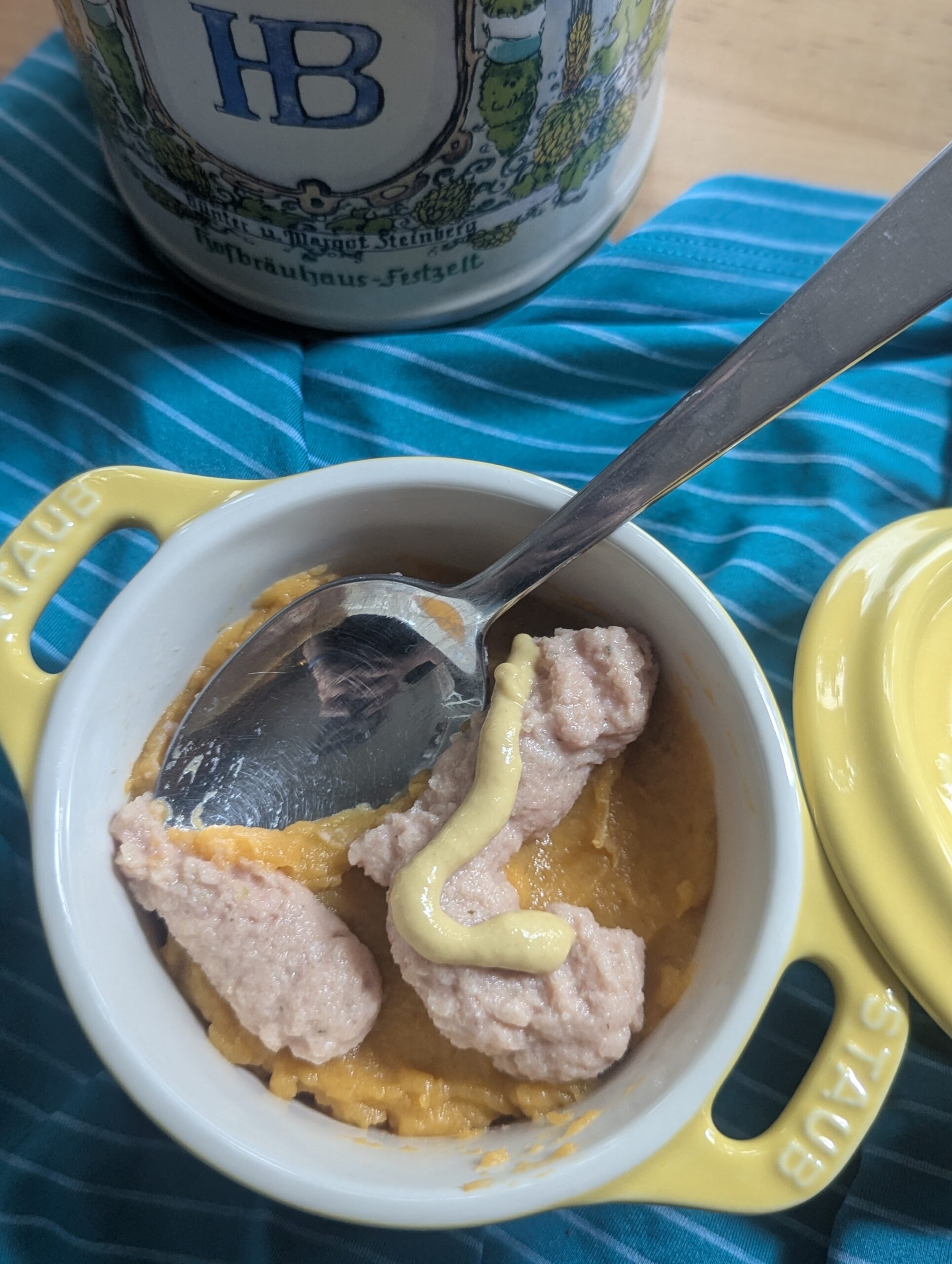
Potatoes would be the more traditional choice (and can absolutely be used), but sweet potatoes work particularly well for a pureed plate. They puree smoothly, provide a naturally cohesive texture, and their bright orange color creates contrast against the bratwurst and sauerkraut. That contrast matters when plating pureed foods. Keeping the sweet potato separate from the sausage mixture makes both components easier to identify and creates a much more appealing plate than blending everything together.
Preparing the Bratwurst and Sauerkraut
Bratwurst can present several challenges for a pureed diet. The casing needs to be completely removed, and browning the sausage would create a firmer, drier exterior that we’d only have to eliminate during pureeing. Instead, the bratwurst and sauerkraut are gently simmered together in broth. This keeps the sausage moist while giving the sauerkraut additional time to soften before blending. Sauerkraut is naturally fibrous, so give this component plenty of blending time. A fine-mesh sieve can help catch any remaining strands that don’t break down completely.
Plating the Puree
Pipe or spoon the sweet potato onto the plate first, then pipe the bratwurst and sauerkraut puree over or alongside it. Keeping the two components distinct lets the person eating decide how much of each flavor they want in a bite. You can use piping bags, reusable piping tools, or simply a zip-top bag with the corner snipped off. There’s no need for specialized equipment to make a pureed plate look intentional and appetizing.
Because the sauerkraut and sausage puree and potatoes can vary in moisture content, adjust each component separately and test the finished foods at serving temperature before serving.
Make this Recipe for Your IDDSI Level
As written, this recipes is at IDDSI Level 4 Pureed. This recipe can also be adapted for Level 3 Liquidized, Level 5 Minced and Moist, Level 6 Soft and Bite Sized, and Level 7 Easy to Chew. See the adaptation instructions below or if you are printing the recipe, they will be included in the notes section.
Level 3 Liquidized (Smooth enough to drink or pour; no chewing): Blend, slowly adding broth until it moves when poured at a pace of 2 mL per 10 seconds (check out the flow test details).
Level 5 Minced and Moist (Soft pieces that fit between fork prongs in a puree; minimal chewing): Mince the sausage into <4mm pieces. Combine the sauerkraut and the potatoes together into a puree and toss the sausage in the puree, watching for separating liquids.
Level 6 Soft and Bite Sized (Tender pieces smaller than the width of fork prongs): Dice the sausage and peeled potatoes to <15mm, blend a portion of the potatoes with the sauerkraut to help create a smooth puree, since sauerkraut alone is a mixed texture..
Level 7 Easy to Chew (Foods that are soft and easily bite into pieces): You can keep the sausages whole, but still remove the casing. The sauerkraut on its own can hold too much liquid and its still recommended to blend a small portion of potato with it to help create a smooth puree for topping the sausage.
Bavarian Bratwurst and Sauerkraut Recipe
Ingredients
Equipment
Method
- Place the potatoes in a saucepan, cover with water, and simmer until very soft and easily mashed with a fork. Drain.
- Remove the casing from the bratwurst and cut the sausage into small pieces.
- Add the bratwurst and 120 g chicken broth to a small saucepan. Cover and simmer gently for 10-15 minutes, until the sausage is heated completely through. Drain off and reserve the broth for texture adjustments.
- Transfer the sausage to a high-powered blender or food processor. Add the Bavarian sweet mustard, butter, heavy cream, and a splash of the broth. Blend until completely smooth, adding additional broth in small amounts as needed to achieve a moist, cohesive puree. Rinse blender.
- Gently warm the sauerkraut with the remaining broth until just warm. Drain off liquid and add to the blender with the cooked potatoes and caraway if using, blending until smooth. Pass through a fine-mesh sieve if necessary to remove any remaining sauerkraut fibers or thin liquids.
- Serve by creating a bed of the sauerkraut-potato puree and top by piping a sausage shape of the bratwurst puree on top.
- Serve warm and perform IDDSI Level 4 testing immediately before serving.
SLP Notes
IDDSI Texture Modifications: Level 3 Liquidized (LQ3): Blend, slowly adding broth until it moves when poured at a pace of 2 mL per 10 seconds (check out the flow test details). Level 5 Minced and Moist (MM5): Mince the sausage into <4mm pieces. Combine the sauerkraut and the potatoes together into a puree and toss the sausage in the puree, watching for separating liquids. Level 6 Soft and Bite Sized (SB6): Dice the sausage and peeled potatoes to <15mm, blend a portion of the potatoes with the sauerkraut to help create a smooth puree, since sauerkraut alone is a mixed texture.. Level 7 Easy to Chew (EC7): You can keep the sausages whole, but still remove the casing. The sauerkraut on its own can hold too much liquid and its still recommended to blend a small portion of potato with it to help create a smooth puree for topping the sausage. Testing Method: This recipe should pass the spoon tilt and fork drip tests defined by the International Dysphagia Diet Standardization Initiative (IDDSI). The puree should sit in a mound on a spoon, sliding off in one bite when tilted/ lightly flicked, with no thin liquid separating. The puree should sit on top of a fork and should not drip through the fork tines (small “tail” is ok). Adjusting Consistency: If the mixture is too thick, add small amounts of liquid (broth, sauce, milk, or water) one teaspoon at a time. If too thin, add a thickening ingredient such as instant potato flakes, pureed vegetables, or thickener as clinically appropriate. Temperature Caution: The viscosity of purees changes with temperature. Always test after reheating or chilling, as thinner or thicker consistencies may alter the IDDSI level. Storage & Reheating: Refrigerate promptly and reheat gently, stirring between intervals. Always retest consistency before serving.Apple Strudel Shake
Apple strudel finishes out our Oktoberfest menu with familiar flavors of cooked apple, cinnamon, brown sugar, and vanilla. Instead of trying to modify the pastry itself, this recipe takes the flavors we associate with apple strudel and uses them to create a smooth IDDSI Level 3 Liquidized drink. It’s also a useful approach when adapting desserts for dysphagia. Sometimes the best way to preserve the experience of a food isn’t to recreate every individual component. A crisp, flaky strudel crust isn’t compatible with a liquidized diet, but the apple filling gives us plenty of flavor to work with.
Start With Very Soft Apples
The apples are cooked slowly with butter, brown sugar, cinnamon, and nutmeg until they’re extremely soft. Cooking does more than develop that warm apple-strudel flavor. It also softens the apple’s structure and makes it easier to blend without leaving small pieces or fibers behind. Peeling the apple first is important. Apple skin can leave tiny particles even after thorough blending, so we won’t be including it here. Once cooked, let the apple cool before blending it with the dairy ingredients.
Building a Creamy Level 3 Drink
Greek yogurt and heavy cream give the shake body and add some richness that helps this feel more like a dessert. Whole milk is used to adjust the consistency. Start with less milk than you think you’ll need. You can always add more in small amounts after blending, which gives you much more control over the finished consistency than trying to thicken a drink that’s already too thin. After blending, pass the shake through a fine-mesh sieve to catch any remaining apple fibers or spice particles.
Getting the Consistency Right
Unlike the Level 4 foods in this menu, this recipe needs to flow. IDDSI Level 3 Liquidized foods and drinks are thick enough to require some effort to drink through a standard straw but still flow under their own weight. The exact amount of milk needed can change depending on the apple variety, how much moisture evaporates during cooking, and the thickness of your Greek yogurt. That’s why the milk in this recipe should be treated as an adjustment rather than something that has to be added all at once. Perform the IDDSI Flow Test after blending and straining, and test the shake at the temperature at which it will actually be served.
Make this Recipe for Your IDDSI Level
As written, this recipes is at IDDSI Level 3 Liquidized. This recipe can also be adapted for Level 4 Pureed, Level 5 Minced and Moist, Level 6 Soft and Bite Sized, and Level 7 Easy to Chew. See the adaptation instructions below or if you are printing the recipe, they will be included in the notes section.
Level 4 Pureed (Smooth and thick enough to hold shape on a spoon; no chewing): Start with a quarter of the milk to help keep the mixture thick enough to not flow. You may also add more Greek yogurt to boost protein and achieve a thicker end product.
Level 5 Minced and Moist (Soft pieces that fit between fork prongs in a puree; minimal chewing): You can mince the peeled apple to 4mm pieces and then use a quarter of the milk and slowly add more Greek yogurt to achieve a thicker puree as needed.
Level 6 Soft and Bite Sized (Tender pieces smaller than the width of fork prongs): Dice the peeled apple pieces to be the width across the fork tines or smaller, and then toss the braised apples in the Greek yogurt with splashes of heavy cream (you’ll want to reduce the milk amount so there isn’t a separate thin liquid).
Level 7 Easy to Chew (Foods that are soft and easily bite into pieces): Enjoy the braised apples in the Greek yogurt mixed with splashes of heavy cream, making sure there are no separate thin liquids.
Apple Strudel Shake
Ingredients
Equipment
Method
- Add the diced apple to a small saucepan with the butter, brown sugar, cinnamon, nutmeg, and 30 g water.
- Cover and cook over low heat for 10-15 minutes, stirring occasionally, until the apple is extremely soft and easily mashed with a fork. Add a small amount of additional water if needed to prevent the mixture from drying out. Allow the apple mixture to cool slightly.
- Transfer to a high-powered blender with the vanilla, milk, Greek yogurt, and heavy cream. Blend until completely smooth.
- Pass through a fine-mesh sieve to remove any remaining apple fibers or particles. Add additional milk in small amounts if necessary to reach IDDSI Level 3 consistency.
- Serve chilled or at the desired temperature and perform the IDDSI Flow Test immediately before serving.
SLP Notes
IDDSI Texture Modifications: Level 4 Pureed (PU4): Start with a quarter of the milk to help keep the mixture thick enough to not flow. You may also add more Greek yogurt to boost protein and achieve a thicker end product. Level 5 Minced and Moist (MM5): You can mince the peeled apple to 4mm pieces and then use a quarter of the milk and slowly add more Greek yogurt to achieve a thicker puree as needed. Level 6 Soft and Bite Sized (SB6): Dice the peeled apple pieces to be the width across the fork tines or smaller, and then toss the braised apples in the Greek yogurt with splashes of heavy cream (you’ll want to reduce the milk amount so there isn’t a separate thin liquid). Level 7 Easy to Chew (EC7): Enjoy the braised apples in the Greek yogurt mixed with splashes of heavy cream, making sure there are no separate thin liquids. Testing Methods: drips freely through fork prongs, doesn’t leave a pattern when surface is pressed with a fork, pours from a tilted spoon without sticking, 8+ml left in 10mL syringe after 10 seconds (syringe flow testing). Adjusting Consistency: If the mixture is too thick, add small amounts of liquid, one tsp at a time. If too thin, blend further with more solids or a thickening agent like xantham gum, being sure to retest at time of serving. Temperature Caution: The viscosity of purees changes with temperature. Always test after reheating or chilling, as thinner or thicker consistencies may alter the IDDSI level. Storage & Reheating: Refrigerate promptly and reheat gently, stirring between intervals. Always retest consistency before serving.Serving the Apple Strudel Shake
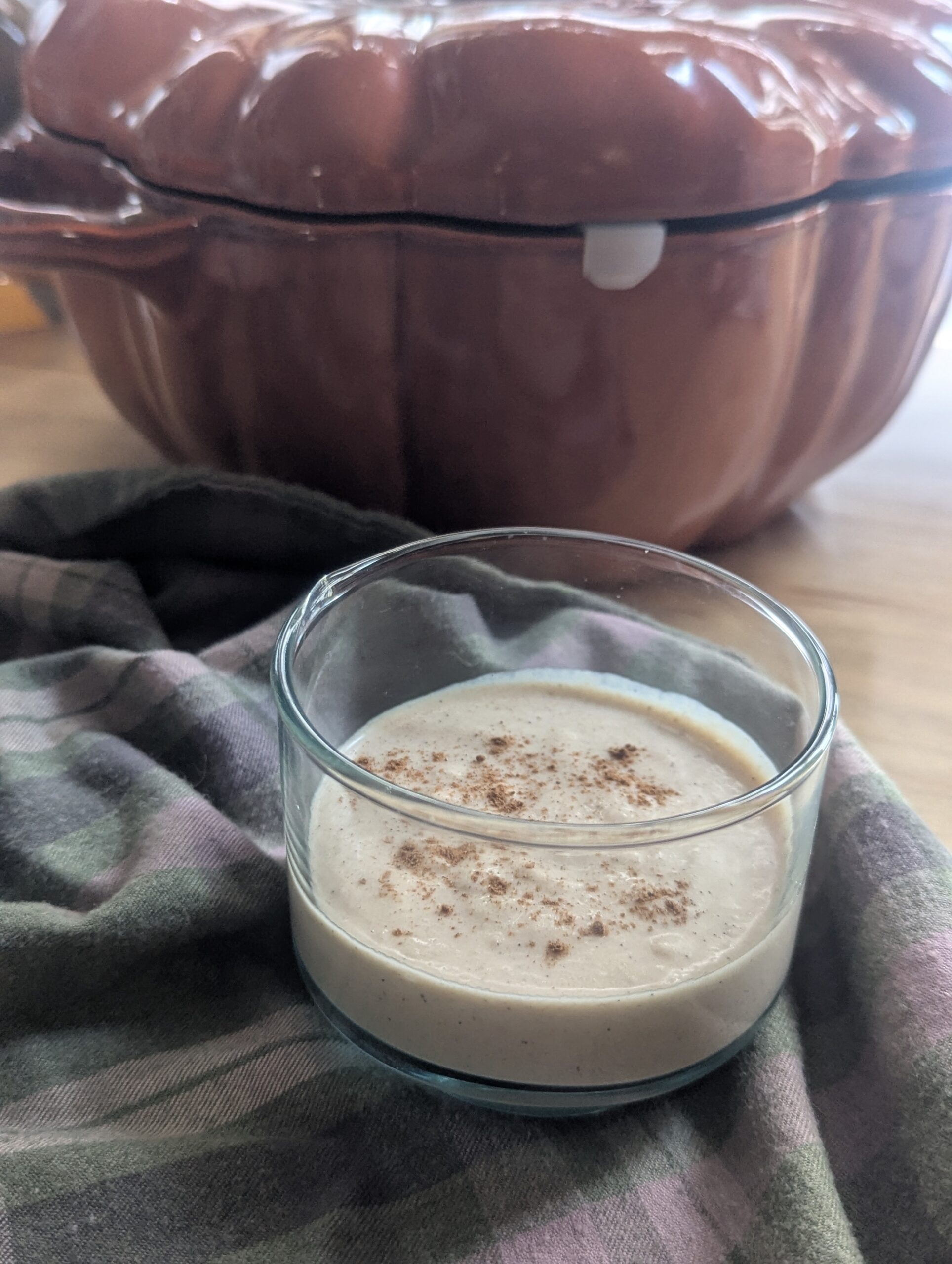
Serve the shake on its own as a dessert or alongside the other Oktoberfest recipes in this collection. A clear glass helps show off the creamy apple color, while the cinnamon and cooked apple provide plenty of strudel character without needing pastry crumbs or other textured garnishes. If you want to add anything to the top for presentation, remember that garnishes are part of the food too. Avoid cinnamon sticks, apple pieces, cookie crumbs, or other additions that don’t meet the prescribed texture.
More Recipes
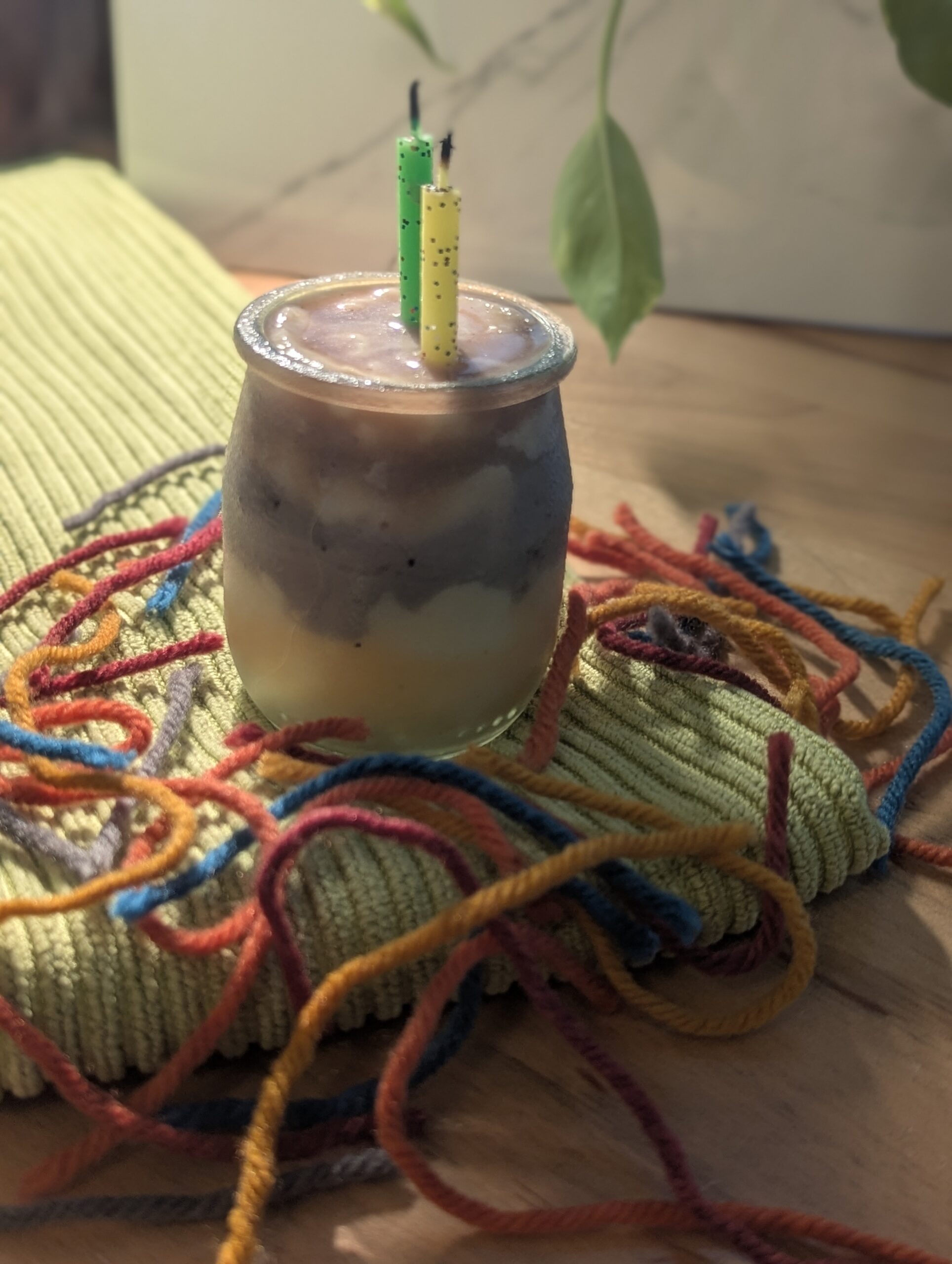
If you are following liquidized Level 3 diet, I have a growing hub of recipes that start at your texture (and you can always find the modifications for any level on each recipe on Same Menu. If you’re looking for another multicourse meal, check out my Italian dinner for two recipe set. Have a birthday to celebrate? Check out this dysphagia friendly birthday cake custard recipe.
Every recipe here is designed for texture sensitive eaters: from dysphagia to dental issues to picky eaters. Get recipe roundups and practical tips by joining the mailing list.