When you’re modifying your meals, it makes a lot of sense to make larger portions, to save yourself some time, effort and dishes. But there can still be a bit of a trade off. Reheated foods often become drier or less cohesive. That could turn a meal that was safe yesterday into something harder to eat today. This guide explains how to reheat texture-modified meals so they stay softer and easier to eat. With a few simple adjustments, leftovers and batch cooked meals remain practical options instead of becoming wasted food.
Why Reheated Food Becomes Harder to Eat
Texture changes can happen at one of three phases of eating leftovers: the cooling, the storage and the reheating. When starches and protein cool, they will firm up. Especially without a good seal during storage, sauces can thicken. Moisture evaporates and edges of foods could overcook before the center is warm when reheating. This system of reheating helps address what your leftovers need with less rounds of testing and adjusting texture.
Step 1: Add moisture before heating
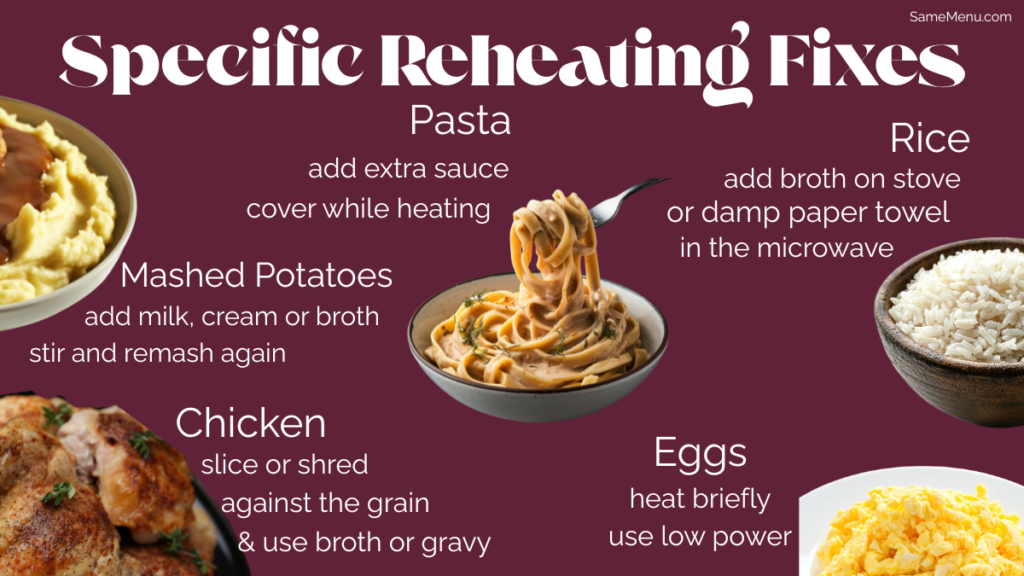
Adding moisture to leftovers first can help make the heating more even. Start small, as its easier to add more than remove. Some options that you can match to your meal include:
- broth
- milk
- cream
- gravy
- pasta sauce
- olive oil or ghee
- vinagrettes, aiolis, other sauces
Step 2: Reheat gently
High heat often dries food out more quickly. You’ll have to spare some time, but the lower and slower reheating usually gives the best results.
Microwave Tips
To improve results,
- cover the dish
- use medium power instead of the maximum level
- heat in multiple, shorter intervals
- stir between rounds
Stovetop Tips
To improve results,
- use low heat
- stir often
- add extra liquid gradually
- cover when possible
Oven Tips
To improve results,
- cover with lid or foil
- use a moderate temperature, not the one the dish initially baked at
- use periodic checks to avoid overbaking
Step 3: Recheck texture before serving
Always reassess the final texture after reheating. Food may need one or multiple of theses steps before enjoying:
- more moisture
- further blending or mincing
- additional binding
- cooling slightly before serving
Use your normal IDDSI testing for your current level.
Common Mistakes to Avoid
- reheating on maximum power only
- heating foods uncovered
- serving reheated foods without checking the texture
- reheating the same portion repeatedly
- Assuming leftovers stay the same texture automatically
Batch Cooking Tip
If you’re preparing meals ahead of time, slightly under thickening or preparing extra sauce can make reheating easier later. Either one gives you more room to adjust the texture after storing it.
Read more: Italian-inspired multi-course date night menu that gives you a head start on meal prep for the week.
Going Forward
By adding moisture, using gentler heat, and checking texture before serving, leftovers can remain soft, practical, and easier to eat. This can reduce waste, save time, and make meal planning more manageable.
For more help, see the guides on making any meal dysphagia-friendly, high-calorie meals, and high-protein soft foods.