Soft & Bite-Sized (IDDSI Level 6)

Tender foods cut into small, bite-sized pieces that are easy to chew and break apart with minimal effort.
Chicken nuggets are a favorite for a lot of kids, but their crispy breading and sometimes chewy meat can make them difficult for children with dysphagia. Even removing the breading doesn’t necessarily make a chicken nugget suitable for a modified texture diet.
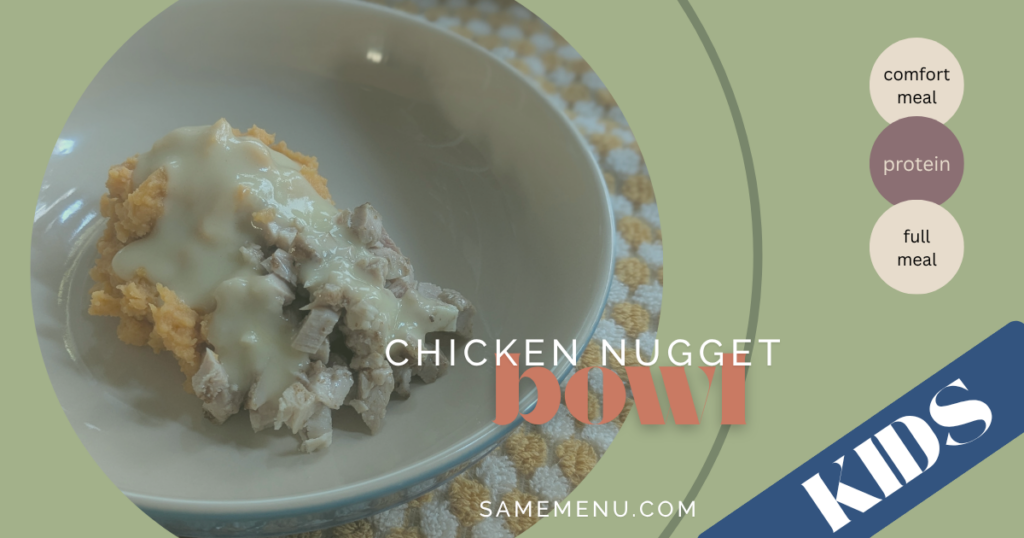
This chicken nugget bowl brings together familiar chicken nugget flavors, creamy mashed potatoes and savory gravy in a meal designed for pediatric IDDSI Level 6 Soft & Bite-Sized. It’s a simple way to serve a recognizable childhood favorite while making adjustments for safer, easier eating.
Making Chicken Soft Enough for Level 6
Chicken can be tricky when preparing modified texture meals. Even when fully cooked, it can become dry, stringy or difficult to break apart. Chicken breast is especially prone to drying out, which is why this recipe uses boneless, skinless chicken thighs. Cooking the chicken gently in broth helps retain moisture and keeps the meat tender. The gravy adds additional moisture and helps the chicken pieces stay soft throughout the meal.
For pediatric IDDSI Level 6, chicken pieces must be no larger than 8 mm in any dimension, and they should be soft enough to break apart easily when pressed with a fork. Keep in mind that cutting chicken into small pieces doesn’t automatically make it appropriate for Level 6; the tenderness matters just as much as the size.
Familiar Chicken Nugget Flavor Without the Breading
Much of the familiar flavor of chicken nuggets comes from their seasoning. A little onion powder, garlic powder and poultry seasoning can help recreate that flavor without introducing a crispy coating. The gravy also contains a small amount of yellow mustard, which adds a subtle tang similar to the flavor of some chicken nuggets and dipping sauces. If your child prefers simpler flavors, you can leave out the optional poultry seasoning. You can also serve the gravy over the chicken or gently mix it in, depending on their preferences.
Why Serve It With Mashed Potatoes?
Mashed potatoes are an easy pairing for this recipe because they’re familiar, inexpensive and relatively simple to prepare. They also give us an opportunity to add moisture to the meal. Butter and milk help create a smooth, creamy consistency that complements the chicken and gravy.
However, mashed potatoes can become thick and sticky, particularly as they cool. Add enough moisture to keep them soft and easy to manage, and check their consistency before serving. A food being naturally soft doesn’t automatically mean it meets an IDDSI level. Even something as familiar as mashed potatoes needs to be prepared and tested appropriately.
How to Test the Chicken for Pediatric Level 6
One of the most useful things parents can learn when starting a modified texture diet is how to test food using ordinary kitchen utensils. For Level 6 Soft & Bite-Sized, the IDDSI Fork Pressure Test helps determine whether a food is tender enough. Place a piece of chicken on a plate and press down with the back of a fork until your thumbnail blanches white. The chicken should squash and break apart under that pressure without springing back to its original shape.Check several pieces, especially the largest ones, and remove any tough, fatty or stringy portions.
Remember that pediatric Level 6 allows pieces up to 8 mm, compared with the larger 15 mm pieces permitted for adults. Using the correct pediatric measurements is important when preparing meals for children. To make it easier while in the kitchen, this measurement is half of the width across standard fork tines.
Pay Attention to Moisture and Temperature
Chicken and mashed potatoes can both change texture as they sit. Chicken may become drier, while mashed potatoes can thicken and become sticky. For children who take longer to finish meals, it’s worth checking how the food holds up over time. Keep the chicken generously coated with gravy, and make sure the potatoes remain soft and manageable. If either component needs adjusting, add moisture as appropriate and repeat the relevant IDDSI tests. Always test foods at the temperature and consistency at which your child will actually eat them.
Make this Recipe for Your IDDSI Level
As written, this recipes is at IDDSI Level 6 Soft and Bite Sized. This recipe can also be adapted for Level 3 Liquidized, Level 4 Pureed, Level 5 Minced and Moist, and Level 7 Easy to Chew. See the adaptation instructions below or if you are printing the recipe, they will be included in the notes section.
Level 3 Liquidized (Smooth enough to drink or pour; no chewing): Blend the finished recipe with chicken broth until completely smooth and flowing 1-2mL per 10 seconds (using the IDDSI flow test at time of service).
Level 4 Pureed (Smooth and thick enough to hold shape on a spoon; no chewing): Blend the cooked chicken with the gravy until there are no lumps and it does not stick to a spoon when tilted. Serve with mashed potatoes, piping into chicken nugget forms.
Level 5 Minced and Moist (Soft pieces that are half the gap between fork prongs in a puree; minimal chewing): Mince the chicken and potatoes into 2mm pieces and then toss in the gravy.
Level 7 Easy to Chew (Foods that are soft and easily bite into pieces): You may cut the thighs into more standard sized nuggets and cut the potatoes into more common matchsticks, but be sure to cook in a moist cooking method like braising to avoid crispy or tough pieces. Serve with the gravy.
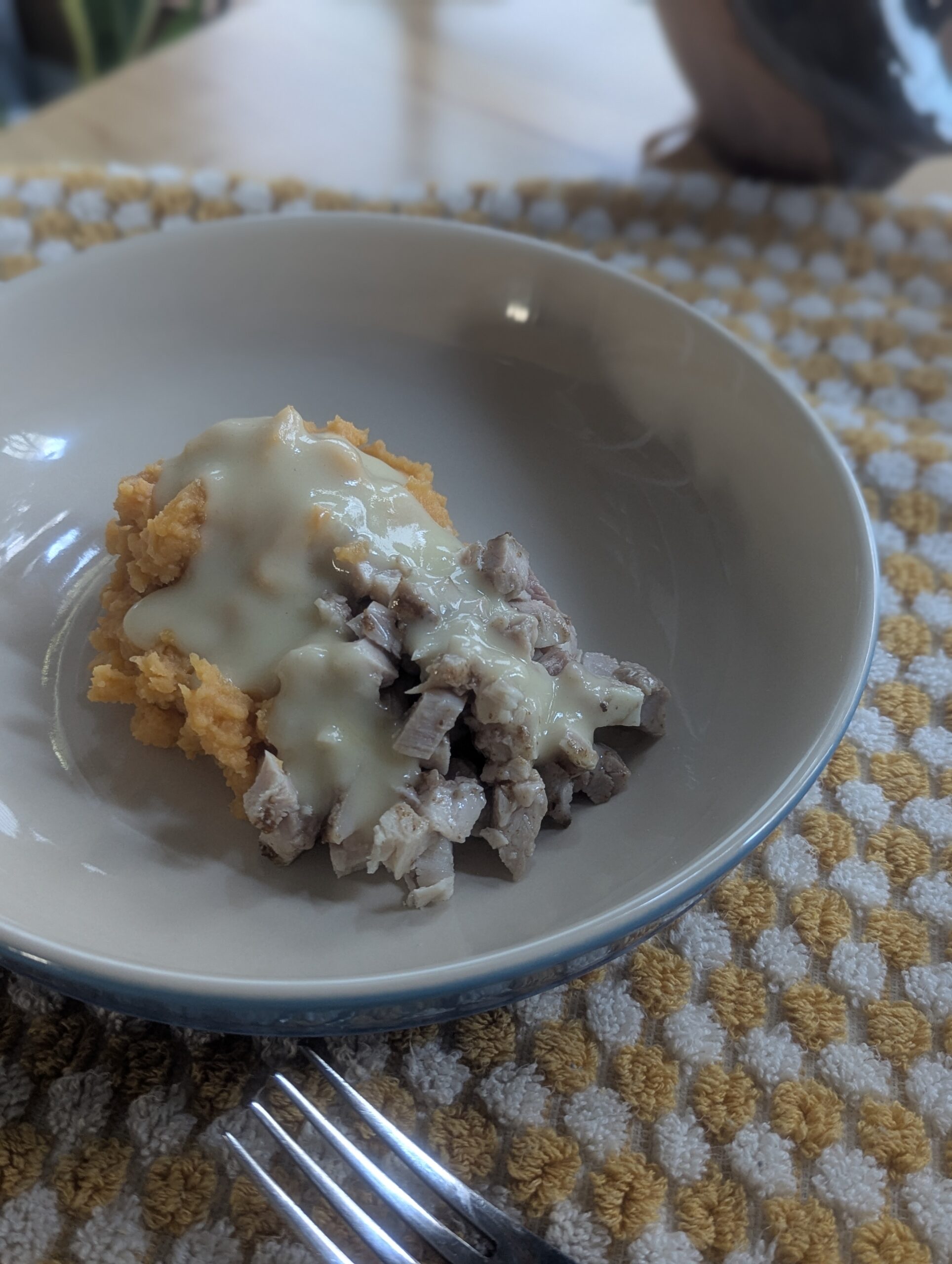
Chicken Nugget Bowl Pediatric Recipe
Ingredients
Equipment
Method
- Place the potato in a small saucepan, cover with water and simmer until completely tender. Drain well.
- Mash the potato thoroughly with the milk and butter. It should be smooth, moist and free from firm pieces. Add additional milk in small amounts if needed.
- Place the chicken, 1/2 cup broth, onion powder, garlic powder and poultry seasoning in a small covered skillet. Simmer gently until the chicken is completely cooked and exceptionally tender, about 12-15 minutes. Do not brown or crisp the chicken.
- Melt 1 tablespoon butter in a saucepan. Stir in flour and cook for about 1 minute. Gradually whisk in 1/2 cup broth and 2 tablespoons milk. Cook until smooth and thickened. Stir in mustard.
- Remove all visible fat, gristle or tough portions. Cut the tender chicken into pieces no larger than 8 mm x 8 mm for pediatric Level 6.
- Stir approximately 1/3 cup gravy into the chicken. Every chicken piece should be moist and coated rather than dry or separate.
- Press the largest pieces with the side of a fork. The chicken must squash easily and completely under fork pressure and should not return to its original shape.
- Spoon mashed potato into each bowl and top with the moist chicken mixture. Add additional gravy as needed to maintain a soft, moist consistency.
SLP Notes
IDDSI Texture Modifications: Level 3 Liquidized (LQ3): Blend the finished recipe with chicken broth until completely smooth and flowing 1-2mL per 10 seconds (using the IDDSI flow test at time of service). Level 4 Pureed (PU4): Blend the cooked chicken with the gravy until there are no lumps and it does not stick to a spoon when tilted. Serve with mashed potatoes, piping into chicken nugget forms. Level 5 Minced and Moist (MM5): Mince the chicken and potatoes into 2mm pieces and then toss in the gravy. Level 7 Easy to Chew (EC7): You may cut the thighs into more standard sized nuggets and cut the potatoes into more common matchsticks, but be sure to cook in a moist cooking method like braising to avoid crispy or tough pieces. Serve with the gravy. Testing Method: Each piece should be cuttable with the side of a fork and pass the fork pressure test; no knife required. Piece Size: Maximum 8 mm for children (1.5cm for adults on SB6). Trim larger pieces before serving. Texture Goal: Soft, tender, and moist throughout with no hard edges, gristle, or chewy skins. Wet cooking methods are highly recommended. Temperature Note: Heat can change firmness; always check texture again after reheating.Making Mealtime Feel Familiar
There are plenty of ways to make modified texture meals more appealing without making them complicated. For this bowl, try arranging the chicken pieces together on one side of the plate, with a scoop of mashed potatoes and gravy alongside them. Keeping the components recognizable gives children an opportunity to see what they’re eating and choose which part of the meal they’d like to try next. You can even shape the mashed potatoes with a spoon or piping bag to make the presentation a little more fun.
Learning to cook for a modified texture diet takes practice, but many of the skills are familiar ones: choosing tender ingredients, cooking with moisture, adjusting consistency and checking the finished food. With a few thoughtful changes, a meal like chicken nuggets and mashed potatoes can still have a place at the family table.
A note for parents: IDDSI testing helps you determine whether food meets the characteristics of a particular texture level. Your child’s feeding or swallowing professional should determine which level is appropriate for their individual needs.
Looking for More Pediatric Dysphagia Help?
I have made a Pediatric Dysphagia hub with all of the recipes and articles that I have made so far that are kid friendly. Bookmark the page; I’m adding to it regularly!
Every recipe here is designed for texture sensitive eaters: from dysphagia to dental issues to picky eaters. Get recipe roundups and practical tips by joining the mailing list.